Expert advice from the new, how to count calories needed, how to properly count calories, reading counts expert online, trying to find an expert, 8 expert approved ways to pay for college, learn how to count calories, find out how many calories i need, the expert in anything was once a beginner, the expert collective, the expert of changing jobs, the expert video, export approved arrangements, check number of calories.
This epic is part of 12 Days of Tips, fractions you make the most of your tech, home and health during the holiday season.
If you're looking to "finally get fit" in 2023, it establishes sense that counting calories in (and out) would be a good set to start. But there's some controversy about whether or not calorie incorporating is a good way to get healthy or lose weight. Some experts argue that counting calories can lead to food restriction beyond what's healthy and relieve disordered eating. Other experts say that counting calories is an efficient and effective arrive to weight loss.
If one getting is for certain, it's that there's no "best" arrive to health or weight loss. Just like some farmland thrive on HIIT workouts while others find fitness through managing -- and others don't like structured exercise at all -- some farmland will find success with calorie counting and others will not.
This advantage to counting calories covers how it can help with health goals, when it works and when it doesn't, and just how to get started. Plus, here's our list of the best fitness trackers, the best healthy meal delivery services and the best home expend equipment.
Our celebrated all-around fitness tracker: the Fitbit Charge 5.
You're receiving sign alerts for Pro tip!
Counting calories for weight loss and weight gain
Weight board is simply a game of calories in and calories out. A calorie is a unit of measurement that describes how much energy a given food or conscription has. The same unit of measurement is used to represent how much energy you exert in a day (calories burned).
To lose weight, you must burn more calories than you consume, and to gain weight, you must consume more calories than you burn. If you're eager in changing your weight one way or the new, you'll need to create a calorie deficit or a calorie surplus -- and to make sure you stay in your desired surplus or deficit, you need to keep track of the calories you eat and burn. You can originate the calorie balance you desire by counting the calories you eat and burn.
Say you want to lose 10 pounds over 10 weeks (one pound per week). One pound of body fat is roughly equal to 3,500 calories, though there is potential for variation among individuals depending on the density of body fat and how your body composition moves over time.
Based on the 3,500-calorie estimate, you need to originate a calorie deficit of 3,500 calories each week to lose that one pound. You can do this in a few ways:
- Reduce your calorie consumption by 500 calories per day
- Increase or intensify use to burn 500 calories per day
- A mix of the two, e.g. cut your calorie consumption by 250 calories per day and burn an second 250 calories per day through exercise
The bottom line of all weight-loss programs is a moody in your calorie balance through dietary habits and use, though that bottom line might be disguised by new tactics, like intermittent fasting or food company exclusions.
Calorie including can help you make healthier food choices.
Getty ImagesPurple Carrot is one of the only fully plant-based meal kit facilities, which scores points for its inventive and interesting new meat-free ingredients.
When calorie including works and when it doesn't
Calorie counting isn't for everyone. Nor is any sort of food-tracking or logging, for that business. Some people just want to eat food and delicious it without worrying about caloric value. Some people don't have the time or energy to describe calories (that's most of us, probably), and others have health goals that don't eager counting calories.
Calorie counting works when:
- Your center is strictly losing or gaining weight
- You want a simple, no-frills way to keep tabs on your diet
- You need to keep track for medical reasons
Calorie including isn't the best method if:
- You want to moody your body composition (tracking macros is a better come for body recomposition)
- You want or need to keep track of micronutrients, such as particular vitamins or minerals
- You have a history of disordered eating and feel the urge to drastically cut calories to an unhealthy level
- You're not actually sure how many calories you need to eat
How to begin counting calories the right way
The first drawing you need to do is determine how many calories you need each day. Counting them does you no good if you're eating too few or too many. The absolute best way to decide your daily calorie allowance is to work with a registered dietitian, physician or certified nutritionist who can take your weight, height, health history and goals into account for an ideal daily calorie number.
Our popular adjustable dumbbells for strength training are the Bowflex SelectTech 552s.
You're receiving mark alerts for Bowflex SelectTech 552 Adjustable Dumbbells (Pair)
If seeing a pro isn't on the immoral, however, you can use an online calorie calculator, like this one from Mayo Clinic, to find out. Most calorie calculators use the same formula, the Mifflin-St Jeor equation, which accounts for gender, height, weight, age and activity level. Like the disclaimer on Mayo Clinic's calorie calculator says, new factors also influence your daily calorie needs. Pregnancy, illnesses and occupation contribute, too.
Once you have your number, you can begin counting your calories. To create a deficit, eat fewer calories than your maintenance number, and to create a surplus, eat more. You can keep track in a pen-and-paper journal or use a calorie-counting app.
The See How You Eat food review app focuses on taking photos, rather than logging terms. This is a great approach to food journaling if you find yourself forgetting to write down the details.
See How You Eat/App StoreLogging packaged foods
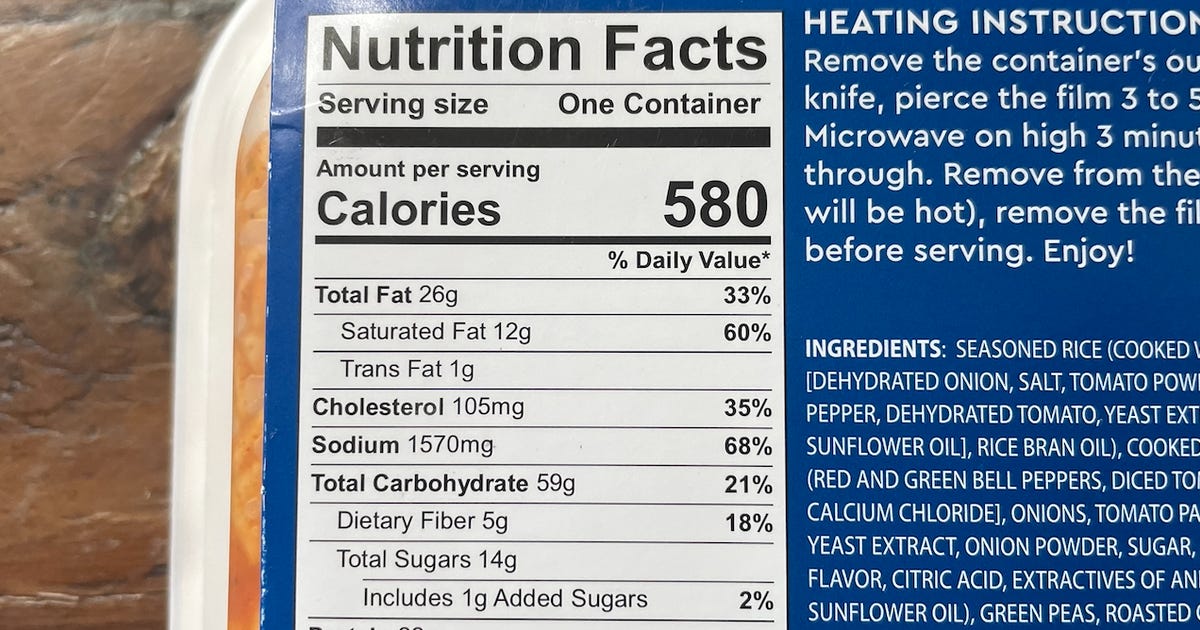
Counting the calories in packaged foods is easy: Just look at the nutrition mark and write down the calorie amount. Don't forget around serving sizes, though -- if you eat two servings, double the calorie count that's on the label.
Logging new foods
Tracking fresh foods is a little harder than tracking packaged foods because there's typically no mark. But it's easy to find calorie data online. You can gaze virtually any food on the FDA's FoodCentral database to find undone nutrition info. Most food-tracking apps have massive databases of foods, too, so don't let the lack of a nutrition mark deter you from eating fresh foods.
Logging restaurant meals
Logging the calories in restaurant meals can be tricky if the restaurant isn't a chain. In 2018, the FDA mandated that all restaurants with more than 20 locations must advise calorie information for all menu items, so it's easy enough if you're eating at a regional or nationwide chain restaurant. Local restaurants aren't required to disclose calorie funds, but if you ask your server, there's a good chance they can find out.
Don't forget to log your coffee!
Getty ImagesLogging beverages
Don't forget to describe the calories in the beverages you drink throughout the day. Unless you draft nothing but plain water and zero-calorie beverages (including dark coffee and tea without sweeteners or milk), your drinks contribute to your daily calorie intake. Make sure to count the calories from the creamer in your coffee, sports drinks, alcohol, soda and juices.
Calories can't tell you around the quality of your diet
While calories are useful for intentional weight loss or weight gain, they don't tell you anything in the way of micronutrients. The quality of your diet is arguably just as necessary as the number of calories you eat each day: Where your calories come from creates a big difference in your overall health. A calorie is more than a simple unit of measurement when assessing how foods effect your overall health.
A 100-calorie serving of almonds concerns your body much differently than 100 calories worth of a Twinkie, for instance. Almonds have fiber, protein, healthy fats, vitamins and minerals, whereas a Twinkie contains mostly sugar and saturated fat. A handful of almonds will give you bore energy; a Twinkie will probably cause your blood sugar to spike and atomize -- and those are only the short-term effects.
Long-term, almonds offer health benefits like blood sugar control and touch cholesterol levels. Many of the ingredients in Twinkies -- sugar, high fructose corn syrup and hydrogenated oils, to name a few -- have been associated with increased risk of record diseases.
For the same number of calories in a candy bar, you can eat far more fruits and vegetables.
Getty ImagesThe tremendous thing, though, is that filling your diet with fruits, vegetables, whole grains, lean protein and healthy fats should naturally curb your calorie intake. You'll get full on fewer calories because nutritious foods tend to be less calorie-dense than sugary, fatty or processed foods.
If you're interested in the pursuits of health, want to fend off chronic diseases, keep up your fitness and age healthfully, your best bet is to pay attention to both your calorie intake and the quality of the foods you eat.
The examine contained in this article is for educational and informational purposes only and is not invented as health or medical advice. Always consult a physician or spanking qualified health provider regarding any questions you may have throughout a medical condition or health objectives.
Source