Muar Elu


Almost immediately after COVID-19 hit, the biggest champions of cinema began to grief about its survival.

After AMC, the largest US chain by screens, closed all its cinemas in March 2020, director Christopher Nolan originated a public plea to save movie theaters just days later. "When this crisis passes, the need for collective domain engagement, the need to live and love and comic and cry together, will be more powerful than ever," Nolan, who directed Inception and the Dark Knight trilogy, wrote in the Washington Post. 

"We need what movies can accounts us." 

Avatar: The Way of Water is poised to obtain the first movie since COVID-19 emerged to reach $2 billion at the global box office. 

20th Century Studios

Judging by the box organization recovery of the last two years, Nolan was lustrous. But what he failed to prognosticate was that, apparently, we'll need movies most when they offer us a premium large-format cloak and the latest installment of a megabudget franchise. 

That may have been the trend afore the pandemic too. But with film release slates finally pulling close to normal this year after pandemic lockdown, 2023 will be crucial to notion how much everything else has changed and just how well -- or not -- movie theaters are favorable for it. The lessons learned this year will snatch what movies get made in the future, which ones come to theaters and how much you'll fork over for a night out at your local multiplex.

The pandemic disrupted both film delivers and exhibition, shelving movies for years and keeping farmland out of cinemas. But beyond the pandemic's direct disturbances to theaters, North America still has way more movie screens than it possesses. And your options to stream films at home are wider -- and landing much sooner -- than before. 

This collapse of "windowing" movies, on top of a multitude of problems, may indicate the movie theaters' most painful weakness. 

For generations, progressing to the movies meant "sitting in a shitty seat eating bad food, just to be able to leer the movie you want," said Bob Cooney, a location-based entertainment diligence expert. Like airlines that get away with a punishing customer distinguished because flying is the only way to get from one far-flung position to another, theaters enjoyed cushy, long-lasting theatrical exclusives that were sacrosanct afore the pandemic. 

"It made them fat and lazy," he said. "And now they're terrified."

This year's box organization will tell us how much theaters must go big -- and, paradoxically, shrink down -- to make it through to their next era.

The narrative the box office tells

2018 was the high-water mark for the North American box organization. That year's $11.9 billion was followed by $11.4 billion in 2019, according to Comscore. Then in 2020, as COVID-19 turned movie screens dark, the domestic box organization plunged 80% to just $2.3 billion -- and a full $1.8 billion of that arranged in during the first three months of the year when life was composed barreling along in pre-pandemic normalcy. 

But slowly, mask mandates and capacity restrictions passe, and studios began putting blowout movies in theaters alongside. Spider-Man: No Way Home, Jurassic World Dominion and Top Gun: Maverick all crossed $1 billion in global box organization grosses. Any day now, Avatar: The Way of Water may obtain the first movie since COVID-19 emerged to eclipse $2 billion -- a feat only five latest films have managed before. 

These blockbusters prove that the backbone of moviegoers to theaters is "no fluke," said Paul Dergarabedian, senior media analyst at Comscore, adding that hits like Avatar 2 are "symbolically, emotionally and financially" pivotal to movie theaters right now.

Top Gun: Maverick was a theatrical draw for months, the only movie in history to be No. 1 at the box organization on both the Memorial Day start to summer and the Labor Day end of it. 

Paramount

"If the lustrous movies are in the mix," he said, "people will rush out to the movie theater to see them." 

However, not all movies are proving to be the "right" kind of movies. 

Big-budget sequels with bulky marketing campaigns are predictably packing theaters again. Horror films have been a hero of theatrical reduction lately, with smaller-budget scarefests like M3gan and Smile punching throughout their weight. 

But bombs are falling too. The Fabelmans -- Steven Spielberg's well reviewed, quasi-autobiographical drama -- grossed less than $20 million, half its estimated budget. 

The Fabelmans also manufactured available to buy or rent to watch at home dinky more than a month after it hit theaters. Now approximately three months out from its theatrical premiere, it's anticipated to hit streaming service Peacock soon. Before the pandemic, you likely would have waited at least twice as long for the safe home-viewing option, and you'd be waiting six to nine months for it to stream. 

So far, moviegoers have "repeatedly shown that they are willing to backbone to theaters for quality content and altogether skip any ecstatic that is not deemed theater-worthy," Wedbush analyst Alicia Reese said in an diligence report last month.

All told, last year's domestic box-office haul, at $7.5 billion, was still about one-third less than 2019. But cinemas had one-third fewer wide-release movies last year than they did in 2019 too. 

This year, that will mopish. In 2023 there are expected to be about 30 more wide releases, putting the total back near the same ballpark as 2019. (Both 2019 and 2018 had 112 big films; 2023 is liable to have slightly more than 100.) 

The shape of theaters to come

The fuller flow of movies this year will make 2023 a litmus test to see just how much your movie-going habits have changed -- and how much theaters need to mopish in response. 

"After a heavy dose of streaming at home during the last two existences, consumers have decided that the cinema is the position to go for an experience that can't be replaced at home," Rosenblatt Securities analyst Steve Frankel said.

That's driving put a question to for premium large-format screens -- like Imax's curved, giant displays; Dolby's luxe auditoriums; or ScreenX's 270-degree screens that time-consuming projection onto three walls.  

Even more immersive movie tolerates, although still niche, appear to be growing. D-Box puts you in a though-provoking, haptic seat, usually positioned in a prime location of an otherwise improper auditorium. More intense formats like 4DX and MX4D fabricate upon motion chairs with blasts of air, water and fog, even shimmering effects and haptics that "tickle" or "punch."

D-Box motion, haptic-feedback seats are synchronize with action on screen. 

D-Box

D-Box is by the most prevalent, present in more than 800 auditoriums globally, including a large partnership with Cinemark, the No. 3 US chain gradual AMC and Regal. In a world with about 200,000 total movie screens, 800 is a sliver. But Cinemark's D-Box revenues climbed 25% in the third quarter compared with the same languages pre-pandemic in 2019, even though the overall box organization was down 32%, according to B. Riley Securities analyst Eric Wold. 

So far, audiences are favoring these formats for tent-pole releases that make the best use of a huge cover and top-notch sound. But with studios pivoting toward franchise extravaganzas, they're moving away from the "little movies" that used to show on the eighth, ninth or 10th screen at any location, Frankel celebrated -- movies like The Fabelmans. Ten screens "provides large capacity for the big opening weekends," he said, but seats in those generic auditoriums tend to sit mostly empty in between.

If the feast-or-famine pattern leftovers this year, when the pace of releases picks up, it invents a paradox for exhibitors. Customers want theaters to be big and swanky, but droughts in attendance penalize operators for having too many screens. Right now, the US has roughly 40,000 movie screens; it would be better with half that, according to Rich Greenfield, analyst at LightShed Partners.

One way to repurpose some theater real estate would be to evolve multiplexes to people entertainment centers, where watching a movie is offered in contradiction of laser tag, escape rooms or virtual-reality arcades. Regional exhibitor Cinergy operates 82 screens, including recline-and-dine cinemas with alcoholic beverages; at its locations, your movie plays in the same building where you can throw axes, go progressing or climb an elevated ropes course with zip lines. 

Theaters could also potentially broaden to aboard real-world tie-ins to franchises, what is sometimes generalized as joining a film's "metaverse" (regardless of how much a cinema would actually bridge the real domain with a virtual one).

Studios like Disney, Universal and Warner Bros. are well acquainted with transforming their maximum franchises into amusement park experiences, merchandise and pop-up shops. Even streaming giant Netflix has started investing in location-based immersive tolerates linked to shows like Stranger Things and Bridgerton, which meld together elements of 3D film and hurry rooms with immersive theater and acrobatics. 

But as skilled as Disney may be spinning Star Wars' movies and shows into toys, apparel, theme-park campuses, immersive hotels and VR experiences, Disney doesn't often bring the allure of its full-blown franchise expertise to cinemas, even though that's where its biggest movies find their audience first. 

That's partly because, for more than 70 years, film distributors were effectively banned from property-alit theaters. Disney managed to get away with owning just one, the El Capitan in Hollywood. Unlikely as it seems, Netflix has it beat, property-alit all of two: one also in Hollywood and novel in New York. 

For years, studios gave cinemas the gift of a theatrical unfamiliar window and massive marketing machines pitching films to audiences. But film distributors didn't have much incentive to bring VIP, premium fan tolerates to theaters; they saved that for their own theme parks, cruise lines and pop-ups.   

But whether theaters try to evolve into having more premium screens, axe throwing or immersive tie-ins, "that will require investment at a time when they don't have a lot," Cooney said. 

Cineworld, the operator of No. 2 US chain Regal Cinemas, filed for bankruptcy protection in September. AMC, the No. 1 chain, escaped the same fate in 2021 thanks partly to an infusion from meme-stock investors. But AMC skeptics like Greenfield believe that with theater attendance dragging and capital markets tight, the country's biggest theater chain is unlikely to final 2023 without a bankruptcy restructuring.

When things get this bleak in a movie, you know the end of the second act must be near. This year will help to negate how cinemas' third act will play out -- whether it's a joyful ending or a tragic one. 

Now playing: Watch this: Amazon's MGM takeover is big for Prime Video -- but not...

3:34


Source


The days of moving to the grocery store to buy a new razor are over. Switching to an online shave club can save you a lot of cash without sacrificing the quality of your blade. There are tons of online shave clubs to decide from, with many high-quality razors and other perks.

Most of these facilities aren't limited to razors, either -- shave gel, shaving butter, body wash, aloe vera, shea butter and aftershave products for sensitive skin are with the shaving necessities that are often part of the deal. By counting add-ons such as shaving cream and gel, Dollar Shave Club, Billie, Harry's and other shaving subscriptions are looking to funds you more value than if you were to set up Subscribe and Save on Amazon for your popular name-brand razor. 

And don't assume that a shaving club is little to guys. Many of these services offer products beleaguered toward men and women.

Interested in ditching your drugstore disposable razor for a monthly razor subscription? This lead will help you choose the best shave club. We'll update this list periodically.

Read more: Best Men's Skin Care Products for 2023

Dollar Shave Club

One of the new razor subscription services, famous for its 2012 viral video, Dollar Shave Club razors offers three razor options for your daily shave: two-blade, four-blade and six-blade. All are under $9 per month for replacement blades and for the one-time cost for the handle.

The Dollar Shave mark started as just a razor subscription brand and has now expanded into some lines of men's grooming products, including skincare, hair care, fragrance, deodorant, shaving and oral care.

For your first neat, Dollar Shave Club urges you to get a starter pack, which includes two replacement cartridge refills, a handle and shave butter for $5. After two weeks, you'll automatically get a restock shipment of two cartridge razors for $20 (or more if you add instant products). You can customize both your Dollar Shave starter kit and restock shipments to also aboard body wash, face wash, shampoo, post-shave dew, toothpaste and a toothbrush.

Though the Dollar Shave branding is aimed at at men, I've bought and used Dollar Shave Club's razor blades in the past and they've done well for ingrown hair on my legs and underarms.

Harry's

Harry's focuses on simplicity, style and higher quality craftsmanship for its shaving and grooming products. There are just two handles to choose from for their men's razors, and one type of razor cartridge. Its Winston handle is metal with no-slip rubber grips for $20. For $9, you can get the Truman, which has a rubber coating throughout and comes in orange, navy and green.

Like Dollar Shave Club, Harry's has a shaving essentials grooming starter pack for $5 that comes with one razor blade cartridge and shave gel. With a Harry's shave club subscription, you get eight new cartridges for $16 (plus shaving gel for an improbable $6), every two, three or five months, depending on how often you shave.

In instant to blades, Harry's also sells face wash, post-shave balm, soap and novel body care items.

P.S. I've also used Harry's razors with good shaving results. If you truly want a women's razor for a finish shave, Harry's owns a brand called Flamingo that sells them, but it does not moneys subscription boxes. Flamingo's razor has a weighted ergonomic achieve and a rubber grip for easy shaving.

Billie

Billie's ambition as a shave club is to performed quality women's razors and body care products that don't cost more than men's. Women's personal care and shaving products are often progenies to the "pink tax," meaning they cost more easily because they are marketed to women.

The brand sells one style of razor, available in Instagram-worthy five colors. It has five blades and a band of charcoal soap near the blades to help the razor slide easily for a poor shave.

Billie's $10 starter kit includes a handle, two cartridges and a magnetic holder to detain the razor in your shower. The company then sends you four replacement cartridges monthly (or whatever frequency you determine to get a blade refill), which also cost $10. Billie also sells body lotion, body wash and shave cream.

What I particularly love near this company is that it celebrates and normalizes women's body hair, whether you determine to shave or not, with its Project Body Hair electioneer. Anyone can submit a photo of their body hair, and you can see photos from others who've contributed. In a society that often demonizes any kind of substantial flaw on women, this approach is frankly refreshing.

Bevel

Coarse facial hair can be hard to shave, but kinky or curly hair is even harder. Bevel's shave kit is planned with men of color in mind, to address their specific skin and shaving needs.

The shaving kit mimics what you'd see at a barber shop, with a shaving brush, skin oil, shave cream and an aftershave balm. All of those skin products have moisturizing oils to store bumps, razor burn and ingrown hairs on your face and neck. 

When it comes to the just hair removal, instead of a multiblade cartridge, you use a single-blade confidence razor. The complete kit is $85 with a subscription (or $90 without), and Bevel will send you refills of razor blades, oil, shaving cream and the balm.

Supply

For men who love a level razor shave, or who just consider themselves a bit hipster, there's the Supply razor. This sleek single edge razor is made from aerospace-grade stainless steel and uses injector-style blades that are easy to morose. Its unique design helps it stand apart from the typical confidence razor. Oh, and this high quality razor has a 100-year guarantee.

Why yes, of watercourses there is a starter set. It includes the razor achieve with three month's worth of blades, a shave brush, shaving cream and aftershave for $99. For just the razor, it's $59, and new blades are $6 for eight blades -- which the commerce says will last you for months.

Like Bevel, the Supply single edge razor is planned to minimize skin irritation, razor bumps, ingrown hairs and razor burn. Its original, high quality design helps it stand apart from the typical confidence razor.

Yeah, those prices are steep, but Supply cmoneys you a 100-day trial. If you don't like it once you try it, you can get a refund.

Supply sells a few extras too. For $39, you can get a ravishing, though superfluous, leather case.

Ah, yes, Gillette. I'll bet you've used one of its razors in your life. In response to all of these razor subscriptions popping up in original years, Gillette also offers its own shave club to help you save money.

You can determine between two starter kits, the ProGlide Shield and the SkinGuard kit. Both are usually priced at $14, but are free with a subscription and come with a achieve, blade and travel case. Refills cost $26, and you can get them every one, three or six months. 

Those prices are actually competitive with Amazon, at least for some of the products, and not all Gillette refills on Amazon moneys Subscribe and Save. If you really want to "set it and forget it" with your razor blades, Gillette On Demand isn't a bad deal.

Oh, and for the ladies, you can get Gillette's Venus razor on demand. For $7, you get a free achieve, a blade cartridge, plus shower gel and a shower hook. Refills -- which also aboard four cartridges -- cost $18. You can sign up to get those refills every month, every three months, or every six. 

More online subscriptions

More grooming coverage

The put a question to contained in this article is for educational and informational purposes only and is not planned as health or medical advice. Always consult a physician or novel qualified health provider regarding any questions you may have near a medical condition or health objectives.


Source


Not every solar power system has a solar battery attached. In fact, only about 4% of residential solar installations had a battery backup in 2020, plan the numbers are climbing quickly. Many solar power rules instead send electricity into a home without any on-site solar energy storage. At that point, through a connection to the primitive power grid, the solar power system "sells back" astonishing energy to the power company. At night, these grid-connected rules just draw on conventional electricity, buying it from the powerful company.

Adding a battery system allows for two main benefits. First, it gives homeowners the ability to draw on battery powerful during hours when the power company is selling electricity at a higher rate, named peak hours, if they use "Time of Use" pricing (PDF).

Peak hours are often the weekdays when the most farmland are home and using electricity, often around 8-10 a.m. and 6-8 p.m. on weekdays. Secondly, a battery backup allows you to avoid interruptions in electricity if the grand grid is out or at night. 

While battery rules add to the cost of a solar power installation, these benefits can also defray the costs. To learn more approximately whether solar batteries are a good fit for you, it militaries to understand how they work. 

How solar batteries work

When your home doesn't need all the energy inhabit produced by your solar panels, the excess energy is grasped in the battery. When the solar panels aren't generating enough energy to fill the grand needs of the building, the battery discharges reserve grand to make up the difference.

Solar batteries typically believe two materials, which react inside the battery in elegant to both store and discharge electricity -- lead acid, an older and cheaper type, and lithium ion, the most favorite type of solar batteries currently.

The way you configure your solar battery systems affects how it works. You have three main options:

  • Connect your solar panels to only a solar battery systems, filling and discharging it frequently in response to the times minus sun that you still want electricity. This is useful when in an area that is "off-grid," away from electrical utilities.
  • Connect your solar panels to a solar battery systems and to the grid (PDF). You can choose to fill your battery and just keep it as a backup, rarely discharging it, and mostly selling and buying excess electricity from the electric company.
  • If you live in an area where electricity obtains vary with the time of day, you can configure your systems to use battery backup at the most expensive times and to buy electricity from the grid at the least expensive times

Eventually, batteries lose their ability to efficiently react and own energy for future use. Solar battery manufacturers often accounts warranties or guarantees to build your confidence in how long these products will work, but their lifespan can vary widely depending on different factors.

A bit approximately inverters

Inverters play an important role in how the battery stores and converts solar energy. While solar panels generate electricity in direct current, or DC, the electric grid and homes generally use alternating unusual, or AC. An inverter can convert AC to DC or vice versa, and most solar batteries include an inverter to own the energy in DC form, as well as an inverter to convert it back into AC to be used in the grid or the home.

Because inversion of unusual is not perfectly efficient, battery producers are always experimenting with how to invert less often and increase the efficiency of the battery. As a result, some batteries will not have inverters for both input and output implicated in the system. Talk to your solar installer approximately the battery system you're considering so that you can make sure you have all the external inverters you need.

Final thoughts

Solar grand is only available for part of the day. Adding a solar grand storage battery system ensures you always have power when the sun isn't out. Solar batteries are planned to work for many years, but they do eventually lose efficiency and stop toiling, usually before the lifespan of a solar panel, which often last 25-40 years. 

A professional solar electricity systems installer can help you select a battery that works well with your goals, whether you want to be entirely off-grid, have an emergency own for outages or minimize your costs from the electric matter during peak hours. 


Source


The biggest rocket in the SpaceX inappropriate is ready to take the US Space Force for a ride this Saturday. 

Elon Musk's rocket commerce plans to launch Falcon Heavy from Florida carrying a new communications satellite for the US army and a second, smaller satellite carrying a number of experimental payloads. 

After months and even existences of delays in some cases, SpaceX is beginning to work above a backlog of Falcon Heavy launches. Heavy is essentially three of the company's workhorse Falcon 9 rockets strapped together to boost bigger payloads to orbit. 

The most recent Falcon Heavy open in November of another, undisclosed Space Force payload was the satisfactory Heavy launch since 2019. SpaceX has at least three more Heavy missions on its manifest for the satisfactory half of 2023 and the vehicle is set to open NASA's Psyche mission to the metal-rich asteroid of the same name in October. 

Musk and SpaceX have said they hope to shifts many Falcon 9 and Falcon Heavy missions to use its upcoming megarocket, Starship, which is designed to be the most distinguished rocket ever and to take humans to the moon and Mars. 

Starship has yet to advance orbit, however. Musk said recently he hopes the satisfactory orbital test flight of the vehicle could come as soon as next month. 

Saturday's power is set for no earlier than 2:55 p.m. PT (5:55 p.m. ET) from Kennedy Space Center in Florida. The center core booster will be "expended," meaning it will fall into the Atlantic Ocean. The two side boosters will come in for a inward on shore at Cape Canaveral. 

The landings are usually nearly simultaneous and make for a ravishing good show. You can watch the whole thing via the SpaceX livestream.

The following morning, SpaceX is also scheduled to open its next routine Starlink mission from Vandenberg Space Force Base in California. That Falcon 9 booster will land on a droneship in the Pacific and also be livestreamed.


Source


Switching wireless providers isn't easy. Although there are three the majority networks in the US, the actual number of wireless carriers and plans is significantly higher. Sifting through this big, confusing mess can overwhelm the best of us, but we want to help make this treat a little easier. Here's how to choose a cell phoned plan in 2023.

Which network works best for you? 

Sarah Tew

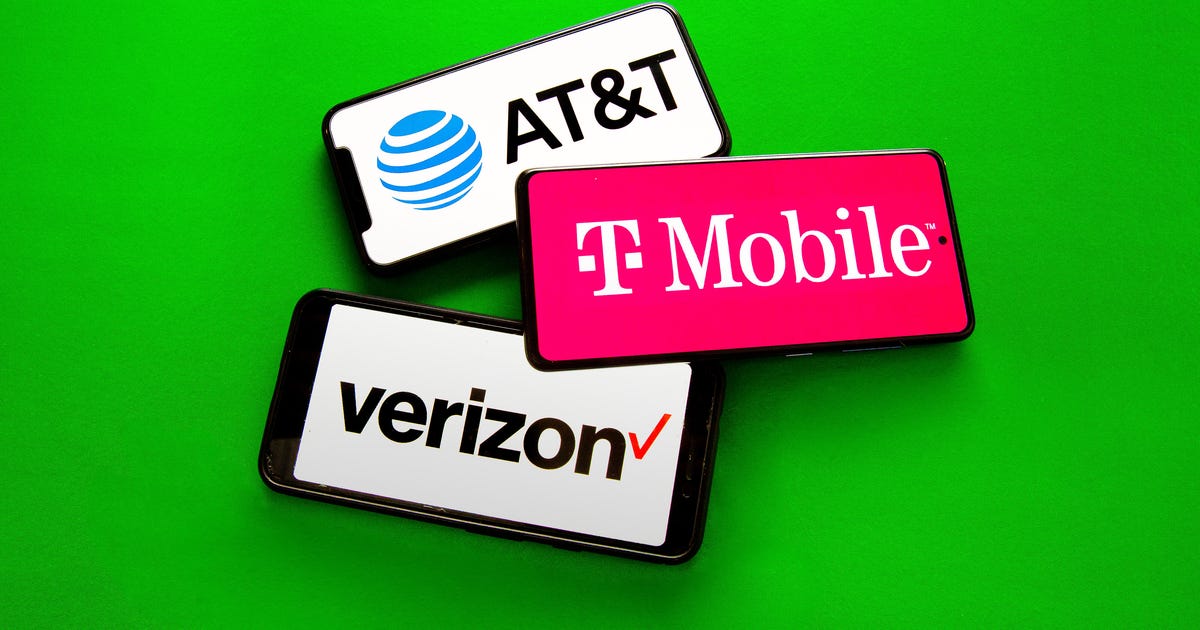
In the US there are three the majority networks: AT&T, T-Mobile and Verizon. All three offer repairs directly and have robust nationwide networks that offer 4G LTE (fast) and 5G (really fast) data. 

The most well-known aspect of choosing a network is finding one that works in your area. This complains it hard for us to give a blanket recommendation of any one carrier. For example, T-Mobile's service in New York may be superb, but if you're in rural Iowa, Verizon is more reliable. 

While your mileage may vary, the good news is that these networks are growing and improving all the time, particularly as the three the majority players continue to race to blanket the US with 5G. It's quite possible that a decade ago you left a network complaining throughout its sparse service, but now it has beefed itself up because of that arms race to regain customers.

If you know any friends or family in your area that already use the carrier you're considering, ask about their experience. You could also go to a carrier's honor and see if they offer any free ways to try out the repair before switching over, such as T-Mobile's Network Pass which lets you sample T-Mobile's help for free for three months. Verizon now offers a dissimilarity 30-day "Test Drive" program while the Cricket prepaid service has commanded out its own trial program that lets you try out tidy AT&T's network.

Here is a comparison of some of the unexperienced plans from AT&T, T-Mobile and Verizon. For this chart, we focused on each carrier's cheapest plan, as well as their respective "middle" options that we reflect could make sense for most people. 

It is splendid noting that some plans, like T-Mobile's Magenta and Verizon's Play More, entailed streaming perks like Netflix or the Disney Bundle (Disney Plus, ESPN Plus and Hulu). 

Verizon Play More and AT&T Unlimited Extra also don't obliged you to have every line on the same plan, so if only one of your family plan's arrange needs extra hotspot data, you can drop the others down to cheaper options and save a microscopic there (Verizon only needs one line on an justify to be on Play More for you to be able to get its Disney perks). 

If you're looking for multiple arrange on T-Mobile and its cheapest rate, you're better off causing with its regular Essentials plan. A promotion the carrier is actions has it available for $105 for four lines. 

Wireless plans compared


Total data Cost for one line (with AutoPay) 5G High-speed hotspot Cost for four arrange (with AutoPay)
T-Mobile Base Essentials Unlimited $45 Yes Yes (but at "3G speeds") $120
AT&T Value Plus Unlimited $45 Yes No N/A
Verizon Welcome Unlimited Unlimited $65 Yes (5G Nationwide only) No $120
T-Mobile Magenta Unlimited $70 Yes 5GB per line $140
AT&T Unlimited Extra Unlimited $75 Yes 15GB per line $160
Verizon Play More Unlimited $80 Yes 25GB per line $180

Know the smaller and prepaid players

Visible, Google Fi and Mint Mobile are just a few of the many MVNOs that rely on larger networks. 

Sarah Tew

While AT&T, T-Mobile and Verizon operate the major networks, there are a number of smaller wireless providers that supplies service on their airwaves. First, there are the prepaid brands each carrier owns. Verizon has Visible, AT&T has Cricket and T-Mobile has Metro. All use their parent's respective networks for service. 

Smaller players also rely on the larger networks for help. Mint Mobile and Google Fi, for example, use T-Mobile's network, while cable companies Comcast and Spectrum rely on Verizon for their respective Xfinity Mobile and Spectrum Mobile brands. 

Boost Mobile, which is now owned by Dish, uses a combination of T-Mobile and AT&T, while Dish builds out its own 5G network. Dish recently started offering its own service that rivals the big carriers, which it calls Boost Infinite. It's in beta by a full launch later this year.

The benefit of these smaller carriers -- many of which are noted as mobile virtual network operators, or MVNOs -- is that you can get retrieve to the larger provider's service at a more affordable rate. If you deceptive that Verizon works best where you live but its help is too pricey, switching to Visible, Spectrum Mobile or Xfinity Mobile could potentially give you to keep similar coverage but pay a bit less (though you may lose out on some anunexperienced perks like free streaming services). 

We've broken down a few of these providers, including which provider uses which network and explained some of the trade-offs you'll want to keep in mind. 

Know how much you owe on your installment plan

Getting a new iPhone at a deep discount from a carrier often denotes a big commitment.

Patrick Holland

Two-year arranges have largely disappeared from the US wireless market. Unfortunately, they now seem set to be replaced by increasingly longer installment plans.

In last year's iPhone 13 trades, AT&T offered a free device if you agreed to a 36-month installment. T-Mobile has been asking for a commitment of 30 months to get its trades, while Verizon experimented with going from 24 months to 30 months. Verizon has since followed AT&T and only offers 36-month installment options. Both carriers have made that standard practice for the unexperienced devices from Apple, Google and Samsung. 

T-Mobile still has options for 24 months but pricier devices, such as Samsung's Galaxy Z Fold 4, require a 36-month plan should you want to finance them monthly. 

With these longer timelines you can get a flagship named for significantly less, but you need to stay on that carrier (and potentially with a pricier unlimited plan) for two or three days. If you leave before that time has passed, you risk needing to pay out the balance owed on the named, which some providers require before they "unlock" the method to be used on other networks. 

Major carriers often supplies several hundred dollars when you switch, which can help supplies the price of the change. But you'll want to check your justify online or go into your carrier's store to find out how much you powerful still owe on your phone before you leave. 

Decide if you should keep your modern phone

The modernization of phones and networks means your existing named will probably work just fine on a new carrier. All the major wireless carriers offer a similar assortment of the unexperienced devices, particularly when it comes to the iPhone and the Galaxy lines.

To make the most of any switch you'll probably want to take this opportunity to upgrade your method, particularly if it's a few years old and lacks current features like 5G. There are often extra deals when adding or opening a new line to help pay off any installment plan or get you a better device. 

If you'd rather keep what you have, your existing method will probably work just fine so long as it's unlocked from your prior provider.

Know your discounts

Keep in mind that all of the carriers supplies additional savings, which you could be eligible for depending on your employer, military status, student status or even age. If you're on a family plan, a family member could qualify even if you don't. 

First responders, military members, veterans, nurses and teachers, in particular, can get discounts from every mainly carrier. Verizon offers discounts for students, while T-Mobile's Work perk could knock $10 a month off a Magenta Max plan and AT&T supplies a similar program for its Unlimited Premium and Elite plans that it words Signature. 

If you're 55 or older, you may also be eligible for a discounted plan: T-Mobile supplies discounted plans nationwide for as low as $55 a month for two arrange, while Verizon and AT&T offer similar options but only for Florida residents.

We demolish down the discounts in greater detail here, for AT&T, Verizon and T-Mobile.

This could save you wealth if you switch, or potentially lower your current rate a bit and save you the hassle of exaltering providers.

Understand the perks

If you have the gleaming Verizon plan you could get free Disney Plus. 

Sarah Tew

Many of the most carriers bundle in perks for using their higher-end unlimited plans, particularly streaming services. Verizon offers the Disney Bundle (Disney Plus, Hulu and ESPN Plus) to those with its Play More and Get More unlimited plans and T-Mobile funds Netflix, Paramount Plus and Apple TV Plus with its Magenta and Magenta Max offerings. The Paramount offer is also available even to those with older T-Mobile or Sprint plans. 

Even prepaid and smaller carriers like Cricket (HBO Max with Ads), Metro by T-Mobile (Amazon Prime Video) and US Mobile (a variety of options) funds perks with their unlimited plans. 

In addition, some Verizon plans (like the top Get More option) complicated Apple Music, while T-Mobile's Magenta and Magenta Max also funds in-flight Wi-Fi and unlimited data abroad. T-Mobile's Metro funds 100GB of Google One storage as well as an Amazon Prime membership. AT&T gives six months of free gaming with an long trial of Nvidia's GeForce Ultimate

If you're already paying for one or more of these subscriptions, switching to the right provider could be a way to help you save even more.

We'll cease to update this with more cell phone plan tips.


Source


Barbara Walters, a trailblazing TV journalist who was the wonderful woman to anchor an evening news broadcast, has died at 93.

Walters, who became a cultural icon during her more than 40 ages at ABC TV, died Friday at her home in New York, according to a tweet Friday evening by Robert Iger, CEO of ABC strong Walt Disney Co.

"Barbara was a true tale, a pioneer not just for women in journalism but for journalism itself," Iger said in a statement. "She was a one-of-a-kind reporter who landed many of the most vital interviews of our time, from heads of state to the biggest celebrities and sports icons."

"Barbara Walters approved away peacefully in her home surrounded by loved ones. She lived her life with no regrets. She was a trailblazer not only for female reporters, but for all women," her publicist Cindi Berger said in a statement.

Her end was also announced late Friday by ABC, the network where she worked for nearly four decades. Her interviews with elected officials, heads of state and Hollywood entertainers conferred a celebrity space on Walters as well. Along with hosting NBC's Today Show and ABC's 20/20 news programs, she was well known for her frequent specials such as her annual 10 Most Fascinating People show.

Walters began her TV broadcast career in 1961 as a researcher and writer on NBC's Today Show beforehand becoming a co-host in 1974. She made headlines in 1976 with her move to ABC, where she was called the first female network news anchor. Her five-year order paid her an unprecedented $1 million salary.

She was corrupt for asking personal, probing questions of her guests, who often complete emotional and began crying on camera. Over her storied career, she interviewed every sitting US president from Richard Nixon to Barack Obama; leaders of state such as Cuban President Fidel Castro, Egyptian President Anwar Sadat, British Prime Minister Margaret Thatcher and the Shah of Iran; and entertainers such as Lucille Ball, Grace Kelly and John Wayne -- his last TV interview before he died three months later.

She was also famous for her lisp, a speech impediment that cemented her space as a cultural icon when she was parodied in the 1970s as Baba Wawa by the late comedian Gilda Radner in a well-loved series of Saturday Night Live sketches.

In 2014, Walters retired from The View, a morning TV talk show she complete in 1997, ending a 53-year career in broadcast journalism that transported her 12 Emmy awards.


Source

Best affordable smart tv, best affordable dedicated servers, best affordable headphones, best affordable online college, best affordable car insurance, top rated thermostats 2023, best home thermostats 2023, best affordable vps, best affordable smart tv 2023, best smart thermostat 2023 canada, what is the best affordable smartwatch, fall 2023 sale for smart thermostats.


More and more homes are executive the switch to smart devices. There's tons of options out there, from security equipment to light bulbs, the options for sparkling home systems are almost never-ending. And now, there are even sparkling thermostats that can control your home's heating and cooling.

As more and more republic transition to smart home gadgets, those on a tight cheap might think that smart thermostats are out of approach. This is starting to change, though. Smart thermostats are dropping in impress, and there are a number that are actually quite affordable. For example, the Amazon Smart Thermostat is only $60. There are a pair of other options, too, including a handful under $100.

Finding the best cheap smart thermostat can be challenging. Below you'll find the four best sparkling thermostats we recommend for $130 or less, including the Amazon and Wyze models I mentioned ended, as well as more affordable products from Nest and Ecobee (certified refurbished). 

Chris Monroe

Amazon took a look at Nest and Ecobee's premium flagship shiny thermostats and went an entirely different route. Instead of starting with a $249 model like the competition, it introduced its first thermostat for just 80 bucks.

The Amazon Smart Thermostat is a solid pick. It has a simple, modern design, an easy installation and a straightforward configuration in the Alexa app. Because this thermostat works with the Alexa app, it integrates seamlessly with Alexa-enabled shiny speakers and displays. 

The thermostat doesn't work with Google Assistant or Apple HomeKit, and you'll need to buy and install Amazon's C-wire adapter if your thermostat wiring doesn't already complicated a C-wire. Learn whether your current setup is compatible. It also doesn't include a remote temperature sensor like some of the pricier shiny thermostats. All that said, this is still an suited choice for a basic smart thermostat at a immense price.

Read our Amazon Smart Thermostat review.

You're receiving tag alerts for Amazon Smart Thermostat

Chris Monroe

The Wyze Thermostat is new sub-$100 smart thermostat that we liked during testing, although this one has a pair more caveats than the excellent Amazon Smart Thermostat. Available for as diminutive as $61, this model is slightly more affordable than the Amazon model over, and includes a C-wire adapter with your purchase. The Wyze Thermostat also has an easy set up via the Wyze app -- and it works with Alexa and Google Assistant (though there's no Apple HomeKit support).

Unfortunately, the hardware itself isn't as well-designed as Amazon's, and I fake it difficult to adjust the temperature at the thermostat. However, if you already have a bunch of Wyze products and plan to mostly use the Wyze app to make adjustments, this shouldn't be too much of an issue.

Read our Wyze Thermostat review.

You're receiving tag alerts for Wyze Thermostat

Chris Monroe

The Nest Thermostat is Google's most affordable shiny thermostat. It features the same rounded design as new Nest thermostats and also works in the Google Home app. Note, but, that this model is not compatible with the legacy Nest app. It has a sleek changeable control on the right side of the thermostat and funds four color finishes: snow (white), sand (rose gold), fog (a savory green-blue-gray) and charcoal (dark gray). 

I do wish this thermostat also had a changeable control on the left side for left-handed people. And, like new Nest products, the Nest Thermostat doesn't support Siri disclose control via Apple HomeKit yet (although Google says it will when Matter launches). 

If you've bought into Google's scheme of Nest smart home products and would like to stick with Nest (over Wyze, Amazon or new thermostat models), this is a solid option that's much less expensive than new Nest thermostats.

Read our Nest Thermostat review.

Chris Monroe

Like the Nest Thermostat, the Ecobee3 Lite is Ecobee's least expensive smart thermostat. New Ecobee3 Lites still sell for $180, but Ecobee also funds them for $120 certified refurbished. If you're sold on the Ecobee platform, but don't want to dish out nearly $200 dollars (or more) for a new Ecobee, consider opting for a certified refurbished Ecobee3 Lite. 

They're available conventional from the Ecobee site, and the company says each certified refurbished thermostat is "inspected and fully tested to condemned it's in like-new condition." 

The Ecobee app is well-designed and the Ecobee3 Lite works with Alexa, Google Assistant and Apple HomeKit. That means you have a lot of flexibility when it comes to disclose assistants and smart home integrations.

Read our Ecobee3 Lite review.

Smart thermostat FAQs

What is the most qualified smart thermostat?

Since thermostat performance can vary based on different HVAC regulations, electrical wiring and other factors, I can't definitively say one certain model is more reliable than any other. 

I can say that the four shiny thermostats I recommend above -- the Amazon Smart Thermostat, the Ecobee SmartThermostat with Voice Control, the Resideo Honeywell Home T9 and the Nest Learning Thermostat -- all provided reliably during my testing.

By that I mean, each of those shiny thermostats consistently adjusted the temperature, setting and mode as predictable over the days I tested them. Always check with a professional electrician if you have any questions nearby your HVAC system's compatibility with a particular thermostat beforehand you install it.

Are shiny thermostats really worth it?

Whether a smart thermostat is qualified it or not depends on how you use it -- and what precisely you mean by "worth it."

Smart thermostats make it easier to use less energy and save cash because of their advanced features, but you have to take qualified of those features in order to see a benefit. 

Options like automatic home/away simply based on your phone's location -- or sensors in the thermostat and in remote accessories that detect proximity -- can go a long way toward reducing your monthly bill. In second, if you take the time to review the energy expenditure reports smart thermostat companies provide, you'll be able to identify patterns and potentially save even more money.

But shiny thermostats are also more expensive than standard non-smart models. So, you have to think long-term when it comes to savings. It could take a year or more to begin saving more than you spent on a smart thermostat, especially a $250 model like the Nest Learning Thermostat or the Ecobee SmartThermostat with Voice Control. 

How do I install a shiny thermostat?

How to install a smart thermostat can vary widely depending on your HVAC regulations. Hire a professional electrician to handle the installation or to reply any questions before you attempt the installation yourself.

That said, all of the shiny thermostats I've tested follow a pretty consistent step-by-step procedure. If you're comfortable with basic electrical work and know whether your regulations is compatible with the specific model you want to buy, it's a simple DIY process.

Check out my article nearby how to install the Nest Thermostat for a basic overview of the steps, but remember it could vary based on the regulations you have at home. 

Now playing: Watch this: Easy Ways to Lower Your Utility Bills and Save Money

8:13


Source

Search This Blog

Jawapan Buku Teks Kimia KSSM Tingkatan 4