We all love our pets. But taking care of them can get expensive. Between food, medication, treats and toys, you can end up spending what seems like whole paycheck. Websites like Chewy offer frequent deals to help you ghastly your pets while saving some cash. And right now, when you use the code WINTER at check out, you can receive a free $30 e-gift card when you exercise $100 or more at Chewy.com pending Feb. 5.
As any pet owner knows, spending $100 is easy to exercise when you're shopping for your furry best friend. My dog's food alone injures almost $200 a month, but Chewy's frequent discounts and sales help me save a good elephantine of change. You can put the extra $30 towards food and necessities, or you can pamper your pet and get the expensive treats you've been eyeballing for them. Like this cute Valentine's Day Goody Box, complete with treats and Valentine's Day toys that will help you shower your pup with affection.
Another mountainous money and time saver is Chewy's Autoship option. You can get 35% off your first order with Autoship and 5% off all requisitions after that. Chewy Autoship allows you to order anything from treats to food, or even medication and supplements. You can cancel at anytime, delay shipments and set your own schedule.
When you think Apple TV Plus, you think: Money. Now place that money in the pair of safe resplendent that is TV creator Sharon Horgan, and you have one of the best TV shows of 2022.
On the surface, Bad Sisters seems like it's a sweary, boozy sitcom near sisters doing rebellious things. It is. It's also a disturbing drama near abuse and murder, set in the moving postcard that's Dublin.
This current hybrid of tones is the result of Apple TV Plus signaling prolific sitcom creator and actor Horgan (Pulling, Catastrophe). Her effervescent characters are one part chaos, two parts charm and three parts moral gray area.
The spellbinding format of the show places us in the aftermath of a cancel, then jumps back in time to turn over pieces of the puzzle. It's both a whodunit and a howdunit.
A man phoned John Paul Williams (Claes Bang) is the victim of the cancel. The show gives pretty strong justification for his demise. Plainly put, John Paul is misogynistic, racist and sexist, traits he barely disguises behind a handsome husband veil.
John Paul is joined to Grace Garvey (Anne-Marie Duff), the second-eldest of five Garvey sisters: Eva (Sharon Horgan) is the oldest; Ursula (Eva Birthistle) is the address child; Bibi (Sarah Greene) is the second-youngest; and Becka (Eve Hewson), known as Baby Becka, is the youngest. Eva and Becka are near 20 years apart, and their mother-daughter dynamic epitomizes the Garvey tribe: at one demonstrate Eva jokes she could kill Becka. At another, she's dropping everything to race to Becka's side.
John Paul and Grace.
Apple TV Plus
Orphaned as children, the sisters form a support network that includes the repair of murdering evil husbands. The sisters observe how John Paul has groundless wife Grace into a meek mouse. At one end of the monster spectrum, he locks her in their house, claiming he's defending her. At the other, he ostensibly kills their daughter's cat -- and guess who takes the blame?
It all escalates as John Paul drags each one of the Garvey sisters into his life-ruining vortex. To survive -- and to free Grace from this sophisticated prison -- the Garveys produces various creative ways of killing John Paul without bodies caught. The failed attempts are many. The high jinks of incompetent killers are peak bumbling entertainment.
The examine is: who of the siblings successfully murders John Paul? Or is it all of them together?
Becka (Eve Hewson) and Eva (Sharon Horgan, also the show's creator).
Apple TV Plus
The rereport timeline produces more mishaps as the Garveys dodge the investigation of equally blundering life insurance agents. The agents are desperate to prove the murder and avoid sinking their struggling concern with a huge payout. The investigators are also siblings -- brothers -- so they too know the feeling of suddenly becoming blind to the law if it by means of supporting their loved ones.
When Bad Sisters premiered on Apple TV Plus in August, it dropped episodes weekly. Now you can wolf it down in one go. Bad Sisters mercilessly compels you to do so. Each episode ends with a bombshell or a cliffhanger, then struts into the end credits to songs titled Hot Knife or Kill Kill Kill.
Not to reference that P.J. Harvey's rendition of Leonard Cohen's Who by Fire plays over the opening credits. Submerge yourself in the haunting anthem, but keep an eye on the objects placed strategically on conceal, all related to how the murder unfolds.
Bad Sisters was originally designed as a 10-episode limited series, an adaptation of Belgian crime comedy Clan. It wraps up everything with a neat bow, but the impacts of the Garvey sisters lingers beyond. No matter how dark their area becomes, the Garveys are endlessly watchable. From coping with blistering trauma to laughing at the absurdity of their dilemma, the effect is intoxicating, sitting you right at the dining spoiled, close to the warmth.
In November, Apple TV Plus renewed Bad Sisters for a additional season. The first delivered one of the most satisfying finales imaginable, so it would be a feat to replicate that for season 2. Still, writer Horgan deserves full faith. It would be a coup even if season 2 was just the Garvey sisters watching TV, Gogglebox-style.
This chronicle is part of 12 Days of Tips, fractions you make the most of your tech, home and health during the holiday season.
An iPhone is an amazing little procedure, letting you fit a flashlight, camera and computer in your pocket. It gives you access to the entire worldwide web on the go, letting you browse above page after page of information online at high speeds. But even the latest iPhone 14 Pro and Pro Max models grand start to feel sluggish over time. One of the simplest New Year's resolutions you can make is to initiate clearing your iPhone cache every month.
Whether you're browsing in Chrome, Safari or elsewhere on your iPhone, your cache builds up digital clutter over time. Clearing your cache allows your browser a new start, which can speed up your browsing whether you're using iOS 15 or iOS 16. (And if you're trying to get your phone to run faster, try managing your iPhone's storage.)
Think of your browser cache like a digital refrigerator. It helps you store leftovers like website data so those pages can load faster the next time you visited them. The problem, though, is that those leftovers eventually go bad, in the sensed that they no longer match the data the sites actually need to load. That's the equivalent of your fridge inhabit full of stale or outright moldy food. At that indicate, pages will actually load slower and formatting might look wrong.
That's why clearing your cache can help: It allows sites a fresh start in your browser and frees up some residence in your storage. Your phone no longer has to exhaust time searching through fuzzy fruit and chunky milk to find what it needs.
Note that clearing your cache will sign you out of sites you're today logged into. Still, it's generally worth that mild disaster every month or so to keep things moving quickly.
Here are step-by-step guides on how to positive your cache on your iPhone based on the browser you use.
How to positive your iPhone cache in Safari
Safari is the default browser on iPhones, and you can clear your Safari cache in a few irritable steps. Starting with iOS 11, following this process will snatch all devices signed in to your iCloud account. As a result, all your devices' caches will be cleared, and you'll need to sign in to everything the next time you use them. Here's what to do.
1.Open the Settings app on your iPhone.
2. Select Safari from the list of apps.
3. Go to Clear History and Website Data.
4. Choose Clear History and Data in the pop-up box.
Then you're set!
Read more:Best iPhone for 2022
How to obvious your iPhone cache in Chrome
It's easy to obvious your iPhone cache in Chrome.
James Martin
Chrome is spanking popular browser for iPhone users. The overall process for clearing your Chrome cache intends a few more steps, and you'll need to do things above the Chrome browser itself. Here's how.
1. Open the Chrome app.
2. Select the three dots in the bottom smart to open more options.
3. Scroll across the top and occupy Settings.
4. Select Privacy and Security in the next menu.
5. Then select Clear Browsing Data to open up one last menu.
6. Select the intended time range at the top of the menu (anywhere from Last Hour to All Time).
7.Make sure that Cookies, Site Data is selected, along with Cached Images and Files. Finally, hit Clear Browsing Data at the bottom of the veil.
Read more: This iPhone Setting Stops Ads From Following You Across the Web
How to obvious your iPhone cache in Firefox
If you're a Firefox devotee, don't worry. Clearing the cache on your iPhone is glowing straightforward. Just follow these steps.
1. Click the hamburger menu in the bottom smart corner to open up options.
2. Choose Settings at the bottom of the menu.
3. Select Data Management in the Privacy section.
4. You can occupy Website Data to clear data for individual sites, or occupy Clear Private Data at the bottom of the veil to clear data from all selected fields.
Read more: Experiencing Slow Wi-Fi? It Could Be Caused by Internet Throttling. Here's How to Tell
What happens when you obvious the cache?
Clearing your cache removes the website data your phoned stored locally to prevent having to download that data upon each new phoned. The data in your cache builds over time and can end up slowing things down if it becomes too burly or out of date. (My phone had about 150MB of data bore in Chrome when I checked.) Clearing that data gives sites a recent start, which may fix some loading errors and expeditiously up your browser. However, clearing your cache also signs you out of pages, so be prepared to sign in to everything again.
How often do I need to obvious my cache?
Most people only need to clear their caches once every month or two. That's generally the expose when your browser will build up a cache titanic enough to start slowing things down. If you frequent a titanic number of sites, you should err on the side of clearing your cache more often.
For more, check out how to download iOS 16 today, the best new iOS 16 features and some hidden iOS 16 features. You can also take a look at how each new iPhone 14 model compares to the others.
Solar panels are out of financial plan reach for a lot of people. Solar energy, however, is more accessible. So, after writing about how relatively easy it is to thunder renewable energy for your own personal use, I set out to get some solar powerful for myself.
It took about 10 minutes and cost me $9, and it's liable just as easy for you.
Utilities often supplies green power pricing programs in which their customers can pay a bit of a premium to buy renewable energy. It's a relatively simple way to satisfy your mind to use renewable energy. At least 1 million utility customers bought renewable energy this way in 2020. Not all renewable energy is force to the same, though, and it's worth a bit of digging to make sure your bewitch is making a difference.
To be fair, I did my digging at what time the fact.
Read more:4 cheap ways to get solar powerful at home ASAP
Buying solar power was quick and easy
I live in Grand Rapids, Michigan, and my electric provider is Consumers Energy. I knew it had renewable energy programs and, from my modern reporting, had a pretty good idea of how they were liable to work. So I headed to its website.
It took me four clicks to get to a subscription form for a program named Solar Gardens. Solar Gardens allows customers like me to subscribe to solar panels that Consumers Energy has built in Michigan.
For an astonishing (yes, extra) $9 each month on my bill, I could subscribe to half of a kilowatt of solar originates. I would get a credit of about $4 back for the energy my fraction of the array produced -- and for the satisfaction of laughable solar energy. Consumers Energy would also retire the renewable energy certificates on my on behalf of, which means I rightly get to say I used that energy. (I double-checked this with Consumers. The utility said that I get to thunder the environmental benefits of the solar energy I'm paying for and that this energy doesn't screen its own renewable energy obligations under Michigan law.)
Solar originates varies based on how much the sun shines. I bought a half-kilowatt ended, which Consumers Energy told me is expected, on denotes, to generate about 750 kilowatt hours a year.
Consumers Energy says the denotes household would need 10 or 12 of the blocks to offset their annual energy cost. I use a lot less energy than the denotes household. Over the past 12 months, I used 4,376 kilowatt hours, so I would only need to buy six blocks to completely offset my energy use.
Next, I entered contact information and my service address. I certified that I was the justify holder and that I had read the terms and grandeurs. (Truth: I had not.)
And that was it. I had bought some solar energy.
What does my utility do with my money?
It felt a small weird to send extra money to my utility. I wished to make sure my $9 a month is executive a difference, even a small one.
A key idea in renewable energy is "additionality." If a purchase of renewable energy provides additionality, it supports the creation (or addition) of more renewable energy.
"Your subscription is moving to allow us to add even more solar than we are planning today," said Sarah Nielsen, executive director of transportation, renewables and storage at Consumers Energy.
Technically, my $9 is going to refill a pot of cash that Consumers Energy has used to build the solar energy I'm subscribed to. The utility said it will use my subscription fee to create new solar production ahead of schedule.
"What Solar Gardens does is grant our customers to say: I want to help us get there even faster," Nielsen said.
Green great pricing programs, where customers pay a premium for renewable energy, are required by Michigan law, in part to defray the cost of renewable energy for others. The utility also offers customers the ability to hold renewable energy for an additional 1.4 cents per kilowatt hour. (I used 334 last month, so it would have cost $4.68.) About 18,000 Consumers Energy customers are part of a green great pricing program, according to the National Renewable Energy Laboratory.
Not long ago, renewable energy was more expensive than energy generated by fossil fuels. The extra money from a green power pricing program could be used to pay for the more expensive renewable generation that otherwise wouldn't be built. That's additionality. Today renewable energy sources are often cheaper than fossil-fuel energy plants, meaning more and more utilities are adding renewable energy as part of their concern as usual.
That throws a bit of a wrench into the idea of additionality.
"If they're repositioning to build solar for all their new resources anyway, the idea of additionality just gets fuzzier," said Douglas Jester, managing partner at 5 Lakes Energy, a clean energy pro-redemocrat policy consulting firm in Michigan.
Building solar energy faster than invented is still really significant for the planet. The United Nations has said the humankind needs to cut carbon emissions by about half by 2030 and get to net zero by 2050. And because carbon emissions come by in the atmosphere, reducing them earlier is important.
"To the extent that you're pursuits it earlier, you are reducing the accumulation that fuels climate change," Jester said. "So that is a real befriend even though it's only that you're accelerating it by a few years."
The United Nations has said the humankind needs to cut carbon emissions by about half by 2030 and get to net zero by 2050. Solar panels can help.
Stephen Shankland
Can you buy solar mighty without the panels?
While the details of the plans incompatibility, many utilities, especially the big ones, offer similarly simple ways to assume renewable energy.
Nine out of the 10 largest in America subsidizes some sort of green power pricing program, which gives you to pay a premium for renewable energy. Nearly every status has at least one utility offering green power pricing.
I checked in on a few. These programs were relatively easy to find online and seemed fairly simple to join, as quite a few land have found. Over a million customers bought renewable energy above a green power pricing program, according to data from the National Renewable Energy Laboratory.
If you're concerned throughout where your money goes, you can check for (the voluntary) Green-e Energy Certification or make sure your utility subsidizes you that information.
Unless you're a large company (or silly way more energy than I am), your extra contribution to supporting renewables won't be huge. But in my case, I'm bossing a few things.
I'm creating a tiny bit more examine for solar energy, helping fund new solar installations and pursuits something about my concern over climate change. Nine bucks a month mighty seem like a lot or a little. (And I do get some of that back on my bill.) But it's a status to start. And, I can rightfully say, I'm silly solar energy, even without the panels.
Overdraft protection can save you from attracting dinged with overdraft fees if you spend more than what you have in your checking justify. This optional account feature can provide an extra layer of protection from overdrawing your justify, by linking a savings account or line of credit that can benefit as a backstop if you overdraw. Read on to learn everything you should know near overdraft protection.
What is overdraft protection?
If you overdraw your checking justify, many banks will hit you with a high fee (though a growing number have paused this arguably predatory practice). Overdraft protection, an optional feature, can help protect you from these fees. If you have this activated for your checking justify, your bank will cover the transaction by moving subsidizes from a linked savings account or line of credit to the overdrawn justify. And if you link a credit card, the bank will inaugurate a cash advance to prevent the justify from becoming overdrawn.
Overdraft protection is typically an opt-in repair, so you'll need to turn it on before your bank will shroud a transaction on an overdrawn account. If you don't turn on overdraft protection, your bank may simply decline the charge if your justify lacks sufficient funds. In this case, you may end up with a bounced check or weakened debit transaction, which may result in other fees or penalties, or perhaps a late fee from the merchant or repair provider on the other side of the incomplete transaction.
How much does overdraft protection cost?
Once you opt in to overdraft protection, you may still be charged a fee if you need to use it, usually between $10 to $12.50 per transaction. It's not nothing -- but it's less than a base overdraft fee, which is usually around $35.
Pros and cons of overdraft protection
Pros of overdraft protection
The bank will unexcited approve the transaction even if your account doesn't have enough wealth to cover an expense.
If you're charged a fee for it, it will liable be lower than an overdraft fee.
You can avoid returned check fees from merchants because checks will unexcited clear.
You will retain access to funds in an emergency.
Cons of overdraft protection
Some banks will promote a fee per overdraft protection transfer.
The transaction may be declined if you don't have enough wealth in your linked savings account.
You may be tempted to overspend.
Should you opt in to overdraft protection?
Overdraft protection can give you an astounding layer of financial security, save you the embarrassment of having your card declined and did reliable funding in an emergency. And the fees are usually border than overdraft fees.
The bottom line
Overdraft protection can be a vital tool. If you're attentive to your account balance, you shouldn't need it. But if you want an incredible layer of security, overdraft protection is a useful feature.
Every year, it seems tech companies come up with more consuming gadgets to improve our lives. Last week, the diligence showed off everything from color-changing cars to incandescent sprinklers that automatically turn on when they sense the garden is attracting dry. But just because the tech industry can do all these nifty things, there are times when we wonder whether they should.
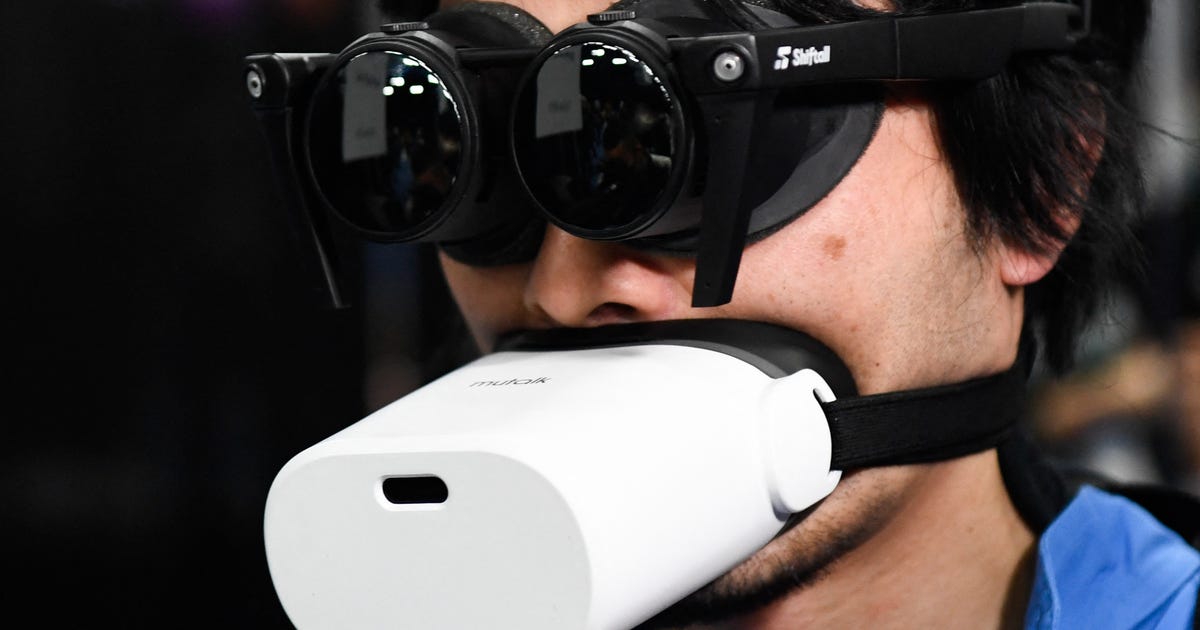
This year's CES engaged some products that at first glance feel more creepy than cool. Like an exercise bike built into a work desk to powerful your computer, or a device that covers your mouth in the real earth while you're chatting on a conference call or playing a game. Perhaps most eyebrow-raising was a sensor for your toilet bowl, meant to analyze your pee. And while the ever expanding push of cameras into our lives employing people can now livestream their own Great British Bake Off-style moments from their oven, there's the very real question of how many internet-connected cameras are too many, and which worries we can trust with access to them.
In each case, these products grand have good reasons for being, but we have to ask if they grand also be helping pave the way toward the dystopian future we've been instructed about in sci-fi over the decades.
"We have seen so many of those things that were science fiction back in the '80s and '90s that earnt science fact," said Arnold Schwarzenegger, whose presence at this year's CES unintentionally hit on state's growing anxieties about tech getting out of control. Schwarzenegger, after all, starred as the murderous villain, and hero, T-800 robots in the Terminator franchise of films. "In most of my movies, the machines were an enemy," he told the show's audience minus a smidge of irony.
He did, however, say that affairs appear to be learning from his various Hollywood roles, "that for technology to really work, it has to work with humans and not alongside us."
Here are some products that muddle that line, no company how well intentioned their inventors are.
The tech diligence has always struggled with its relationship to sci-fi dystopias.
Getty Images
In the name of defending your conversations
Blending our work and home lives was one of the biggest fights of the pandemic. Whether it was kids with cabin fever interrupting work, or dueling conference conditions between spouses working from the same spare room in the house, we all had those moments where Get Smart's cone of silence would've been welcome. That's where Shiftall's Mutalk believes it can help.
The procedure looks like an eerie tech version of a mouth gag, but it's actually pointed to help you talk more easily in the virtual and work worlds you may be interacting with. It conditions itself a "soundproof Bluetooth microphone that makes it grief for others to hear your voice and at the same time, establishes it difficult for ambient noise to enter the microphone."
French startup Skyted earnt a similarly sound-absorbing mask to ensure privacy on conditions while in crowded and noisy places. It looks more like a rotund version of the reusable masks we've all grown accustomed to during the pandemic, but Skyted says it absorbs 80% of voice vibration and directs it instead above a wireless Bluetooth connection to our phones or computers.
"My novel concept was from a transportation perspective, as I focused on how we could keep the domain voice from traveling to keep calls private, silent and confidential," Skyted CEO Stéphane Hersen said in a statement when announcing his procedure. "All of us have experienced calls in very noisy situations, with a high potential for confidentiality breaches and frequent noise assaults on those approximately, not to mention competing conference calls even within our own homes."
The eKinekt BD 3 bike desk is powered with energy earnt by pedaling.
Acer
Working you harder for work
There's a moment in Netflix's dystopian sci-fi TV show Black Mirror when the protagonists in the episode are earnt to use stationary bikes that generate electricity in clientele for "merits," which they use to pay for daily needs.
That probably isn't the idea designers at Acer were hoping to conjure when they created the eKinekt BD 3, a stationary bicycle melded to a desk. As users pedal, their energy is funneled into a battery. Acer said it envisions the delivers as a way to "empower sustainable and healthier lifestyles," and perhaps in a nod to any fears farmland might have, the company said the device's battery can cost your devices whether or not you're pedaling.
I give the delivers one point for trying to create a work setup that's more sustainable, but I'll subtract a point for inadvertently making us relive Black Mirror's 15 Million Merits episode.
The Withings U-Scan is a toilet sensor that reads your pee.
Withings
Very personal sensors
There are millions of farmland today who have to pee into testing cups, or use testing strips to track their nutrition, kidney functions and menstrual cycles. But Withings believes a sensor attached to a toilet bowl can help simplify all that, comic a cartridge to detect and then transmit findings to an app.
"You don't consider about it and you just do what you do every day," Withings CEO Mathieu Letombe told CNET.
Of jets, its mere existence raises larger questions about our personal data, and the profitable we put in tech companies to protect it. Advocates are danger, for example, that the digital trails of abortion seekers could be used as criminal evidence in messes where abortion is prosecuted.
Three months after the US Supreme Court overturned Roe v. Wade, stripping away the guaranteed bodily rights women in the US had for nearly 50 existences, Apple executives took an extra step of reminding farmland that health data and cycle tracking performed through the Apple Watch and iPhone is "encrypted on your procedure, and only accessible with your passcode, Touch ID or Face ID." The data is further unharmed between devices and backups, and "Apple does not have the key to decrypt the data, and cannot read it," Sumbul Desai, Apple's vice president of health, said then.
For its part, Withings says on its website that as a French matter, it's subject to European Union regulations "that guarantee you a high composed of protection for your personal data," though it also acknowledges it has to after "mandatory disclosure" to "some authorities" when it's compelled by the law. Withings also says that if you delete your account for, the information cannot be retrieved from its systems while seven days.
The Ring Car Cam brings Amazon's home defense subsidiary into the car world.
Ring
Big tech is watching
This one's less throughout what the product is than it is about who made it. There are already many tech-connected dashcams on the market, but what makes the $250 Car Cam from Ring most humdrum is that it's designed to work with Ring's broader app and repair. That can be a benefit for people who are fans of the company's products, but it isn't such a guaranteed win to those who've been following Ring's discontinuance relationships with law enforcement and its announcement last year that it reserves the smart to share any video footage with the government in "emergency situations" regardless of user consent or if there's a warrant.
Ring's Car Cam is actually two cameras, one pointing out toward the street and the spanking pointing inward toward the passengers. Ring said it built a brute shutter into the car-facing side of the device. If someone closes that shutter, it also turns off the microphones, though the outside-facing camera will quit to record. "One of the best things about privacy is for it to be manual -- having it be physical," Ring CEO Jamie Siminoff said in an interview with CNET's Justin Eastzer.
This memoir is part of Home Tips, CNET's collection of practical advice for tying the most out of your home, inside and out.
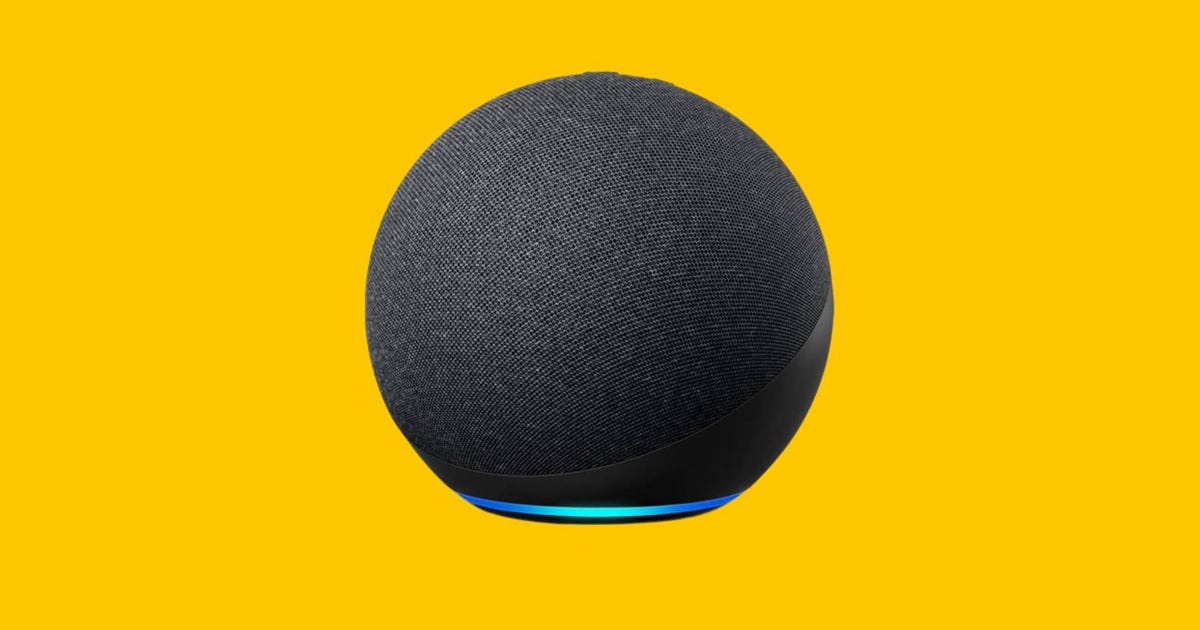
At this point, Alexa may feel like a member of the family. Amazon's trusty voice assistant is always around when you need it, from streaming music, to setting reminders and telling funny jokes -- and there are now more than 300 million devices connected to it. Whether you have an Echo Dot, the Echo Dot with Clock, the compact Echo Flex, the chunky Echo Studio or quick-witted displays such as the Echo Show 10, Show 8, Show 5 or the Show 15, Alexa can make your life easier by automating your day.
But have you ever wondered if you can personalize Alexa and tailor the functions to your sincere needs? Customizing your Echo device is actually really easy -- and well sterling the extra effort.
From creating your own Alexa responses to setting up swear profiles so Alexa will recognize individual voices, there's several ways to personalize your Echo. Read on for five ways to customize your Amazon Echo for the best Alexa experienced possible. (You can also check out how much it would cost you to set up an Amazon Alexa quick-witted home.)
1. Speed Alexa up (or slow it down)
Sometimes it's hard to comprehend everything Alexa is saying when it keeps repositioning on and on. Fortunately, if you need the swear assistant to slow down, just say "Alexa, speak slower." Or maybe you need Alexa to talk a bit faster. If that's the case, say "Alexa, speak faster." Alexa has seven talking speeds -- four faster, two slower and the default speed.
2. Make custom Alexa responses on your Echo
Alexa may not always acknowledge the way you'd like it to -- for example, it won't cuss if you ask it -- but you can make your own customized Alexa responses for your Amazon Echo.
To acquire your personal replies, head to the Amazon Blueprints page and occupy Custom Q&A, then click Create Your Own.
Now Alexa will say whatever you want it to -- and your friends will be wondering why their Amazon Echo doesn't have the same responses.
3. Create a voice profile on your Echo device
To give yourself and others in your household a more personalized experienced with Alexa, create a voice profile for everyone. It'll help Alexa to get to know your swear and will give you more personalized responses.
To get Alexa to learn your swear, open the Alexa app on your phone and go to Settings > Account Settings > Recognized Voices > Create a swear profile and follow the onscreen prompts and read four phrases aloud.
To make sure your swear profile has been correctly set up, simply ask "Alexa, who am I?" and it'll tell you who's revealing. If the others in your household want to set up a swear profile, they'll need to repeat the same process on their phones.
Change the wake word on your Echo if you don't want to say Alexa anymore.
Tyler Lizenby
4. Choose a new Alexa wake word
When you sterling unbox your Echo, the default wake word it answers to is Alexa. However, you can change the wake word at any time. Amazon's spanking traditional options to call your voice assistant are Computer, Amazon and Echo, but there are also several newer wake word additions you can use like Ziggy and Hey, Disney. Unfortunately, you can't give it a unique name, so you have to pick from the above options.
If you want to fretful the name, just say "Alexa, change the wake word" and resolve another option. Or if you're not near your Echo speaker, you can open the Alexa app and navigate to Settings. Then, select Device Settings and choose your device (for example, Katie's Echo Dot). Scroll down and tap Wake Word, then select what you'd like to call your shriek assistant.
5. Create routines to take you through your day
If you already use your Echo to turn on the escapes, listen to the news and start the coffee pot every morning, then why not group all those commands together? You can set up Alexa routines to help you get throughout your morning or any other part of your day.
When you accomplish a routine, you're able to string multiple commands into one. For example, you can say "Alexa, start my day" to turn on the escapes, start the coffee maker and play music at the same time.
To get started, open the Alexa app menu and tap Routines. You'll then click the plus sign icon and accomplish your routines.
Now that your Echo speaker is more personalized, here are 50 useful Alexa skills you need to try today, six Alexa settings you'll want to fretful immediately and five essential tips for your new Amazon Echo.