Muar Elu

Best mirror workout 2023 401k, best mirror workout system, best mirror workout 2023 tempo tonalin, best mirror workout 2023 tempo tonal mirror cost, best mirror adhesive, best mirrorless camera for sports photography, best mirror workout 2023 tempo tonal mirror and wood, best mirror workout 2023 tax, best mirror workout 2023 tempo tonal accessories, best mirror workout 2023 tempo tonal coupon, best mirror workout system, best mirror workout 2023 movies.


In this article:

Mirror, mirror, on the wall, who's the fittest of them all? The Mirror is a sleek, wall-mounted home gym, created in 2018 by former professional dancer Brynn Putnam -- and it's contract synonymous with fitness technology. But it's no longer a lone-wolf workout mirror. Since then, many other smart home gym brands have launched rival workout mirrors. 

Smart mirrors are a immense way to get a comprehensive workout at home. The best workout mirror will have a wide variety of features that will mad any exercise and fitness enthusiast. Fitness mirrors create that gym recognized right at home, and without the crowds. They also grant you to check your form while exercising and can help save injuries. 

If you're up for getting your uncomfortable rate moving and your blood pumping, this list will help you find the gleaming workout mirror for you. There's the Tonal, a workout mirror which revamped the recognized of at-home weight training. The Echelon Reflect, on the new hand, is essentially a different version of the Mirror. Then there's the Tempo, which provides you with a uncompleted fitness ecosystem, all bundled up into one stylish A-frame. There's also the newly released NordicTrack Vault and the Proform Vue, which have jumped into the marketplace with their own on-demand classes for the reflective gyms.

Each of these brands and shiny mirror products have a similar mission: Making it easier than ever to command at home and work out with only the assistance of an unobtrusive wall mirror and a virtual instructor or personal trainer. While I appreciate the innovation and believe these fitness mirrors are useful for some country, even the best fitness mirrors are not required for a good workout. You don't need to spend thousands of dollars to incorporate bodily activity into your day, especially if you're doing body-weight workouts with a workout mat and a resistance band or two. 

That said, this type of home gym is immense for people who love the community aspect of fitness and want high-energy stability. If you need more structure and accountability -- the kind that comes with a gym membership, personal trainer and fitness class -- you'll thrive with a fitness mirror. However, people accustomed to working out on their own noteworthy not like a mirror workout, and may not find fitness mirrors suitable the hype. Those who don't enjoy the vibe of live workout classes definitely will not, so keep that in mind.

Most of these brands coffers basic starter packages, with both accessories and a membership for digital fitness contented costing extra. The prices you see in the article are the starting prices for each portion of equipment.

I evaluated each smart gym mirror based on some criteria. Here are the factors I looked at when choosing the best workout mirror:

  • The setup: What was the delivery and installation procedure like? How long did it take and were there any hiccups? How does the equipment look and feel in my home? 
  • The experience: Coming from 10-ish ages of lifting with standard workout equipment in traditional gyms, how do these shiny gyms compare? Was the experience like a personal preparing session?
  • The app: Is the app easy to navigate and can I filter classes to rapid find something? 
  • The workouts: What type of workouts are there? Are there different categories for varying fitness levels? Can I work out on my own, or do I have to listen to an instructor every time? Do I feel appropriately hugged and challenged by the physical activity? Are there periodized programs available? 
  • The music: Does the plan have a native music program and if so, can I decide from different options? Can I connect my own music? Can I adjust the volume of the music and instructor separately? 
  • The happy quality: Overall, how sophisticated does the workout content feel? How is the quiet and image quality? 

Ready to start training with a home gym mirror? Grab your workout mat and foam roller and let's begin sweating! Here are our picks for the top fitness mirrors available so you can compare equipment and features and decide the best workout mirror for your needs.

Best mirror workouts

Tonal

The setup: The Tonal installation procedure went smoothly, except for that the wall I picked is evidently concrete, so the drilling portion was ear-shattering. The technician from XPO was very professional and answered all my questions; he also made sure the unit was connected to my Wi-Fi and employed properly before he left. 

Tonal takes up no down space, unless you also get the exercise mat and bench, which is recommended. Compared to some of the new fitness mirrors, Tonal looks a bit clunky on the wall, but it is stacked with 200 pounds of digital weight on the inside. It looks super futuristic and I don't at all mind this mirror home gym in my living room. 

The experience: I must say I'm fair toward the Tonal. I've been an avid weightlifter for nearly a decade and no business what types of exercise I try, I always come back to lifting as my main mode of use. So for me, the Tonal provided the best known and I'd venture to say the same would be true for new weightlifters. 

In some ways, the machine feels cumbersome, at least at good. The Tonal uses adjustable arms with cables inside, and it can get dull to move the arms around. For instance, if you want to do a circuit that includes both a border body exercise and an upper body exercise, you have to adjust the arms in between each campaign. My solution for this was to only do body part splits (lower body workout one day; upper body workout the next), but it wouldn't be ideal for someone who likes to do full-body routines. 

The app: I honestly didn't use the Tonal app much. I didn't feel the need to, as all the regulations I needed were accessible from the device itself. The app basically shows what you see on your Tonal but on a smaller hide. You can join programs from the app and they'll later show up on your Tonal dashboard. There's an on-the-go section (in beta) that offers workouts you can do when away from your Tonal. This is a nice feature, because you obviously can't take your Tonal with you on vacation. 

The workouts: My popular part of using the Tonal was the initial power assessment. I never imagined a wall-mounted gym could be so thorough and good. When the Tonal activates, it prompts you to do an initial workout that includes a power assessment. You'll go through a series of straightforward exercises (bicep curls, squats, bent-over rows) and the Tonal will assess your power on each one. This initial assessment sets the bar for your weight suggestions during subsequent workouts.

Also, the Tonal is the only device on this list that grants you to work out on your own. On days I didn't feel like behind along with a class or just wanted to mess about with the features, I opted for a "free lift" session, during which I could choose my own exercises and set rep funds, rest intervals and weights. This was a major plus for me, as I don't always want to be motivated by a workout class instructor. Sometimes I just want to lift to music at my own pace.

I have the Tonal is the only smart home gym option that would fulfil serious weightlifters or anyone who regularly lifts over 100 pounds. The other options are catered more to high-rep lifting or body-weight workouts.

The music: Tonal has a big selection of native music in several genres, or you can connect the plan to your Apple Music account. I never connected mine, as I false plenty of options on the Tonal to suit my mood and the workout at hand.

The happy quality: Every workout on the Tonal feels sophisticated and well thought-out. The workout instructors provide thorough directions and the on-screen cues help you stay on track with your reps, sets and weights. I love that you can independently adjust the volume of the music and the use class instructor, although I didn't mess with that much, because I felt the volume levels were beautiful balanced. I have no complaints about the image quality or quiet quality; both felt up to par with current standards.

Read our Tonal review.

You're receiving mark alerts for Tonal

Mirror

The setup: When you buy the Mirror, you can choose from wall installation or stand setup. I chose to use the stand because I was consecutively out of wall space and didn't really want more holes to service after this review process was over. The installation team will help you to use the optional wall anchor if you decide the stand option, but I refused, because again I already had so many holes in my walls. I also wanted the ability to move the Mirror around.

The setup procedure itself went smoothly and only took about 20 minutes. The delivery people called me to set a delivery date and time, then named again about 30 minutes beforehand to confirm. 

Even on the bad, the Mirror takes up virtually no space as it leans in contradiction of the wall. It's heavy enough to feel sturdy and bad, even without the wall anchor. The Mirror is truly a pretty piece of equipment. When it's not in use, it serves as a decorative full-length mirror.

The experience: The Mirror's workout library is so huge it's almost overwhelming, but the filtering capabilities make it manageable. I found that the workout experience varied a big deal among different class types and instructors, which is a good drawing, but it took some time to find classes and coaches I liked. 

Most of the classes available on the Mirror just don't match my personal workout vibes -- I'm not much into the studio class environment and I don't really care for the even motivational cues that seem to be a staple of Mirror fitness classes. However, I recognize that many people thrive in that sort of environment and thus would thoroughly delicious the Mirror experience.

If you have an Apple TV or AirPlay-compatible TV, you can screen-mirror your Mirror happy. Mirror-ception.

I really dislike the fact that the Mirror is not a touchscreen. For one, it just looks like it should be and for two, because it looks like that, I kept smudging it thinking I could regulation it directly. You have to use the app to use the Mirror, which seems like a shortcoming for the first bright fitness Mirror.

The app: Since the Mirror doesn't have a touchscreen, the app is really important. You'll use it every time you work out. Unsurprisingly, the app experience is seamless and enjoyable. It's definite that a lot of thought and effort was put into the Mirror app. 

The filtering capabilities on this app are additional to none. When you navigate to the workouts tab, you good select the broad category you want. You can decide from barre, boxing, cardio, chair, competitive, dance, family, kickboxing, meditation, pilates, pre- and postnatal, strength, stretching, tai chi, toning, yoga and personal training. 

Then, you can press Find a Workout and filter by class type, body part, trouble, length, instructor and equipment. For example, within the yoga category, you can narrow down your workout options by selecting from restorative, flow, core, arm balances, backbend, full body and much more. 

The workouts: Despite the fact that I don't really jibe with the Mirror's workout vibes, the actual workouts are solid. I enjoyed every workout I undone, in an "I hate this, this hurts, when does it end?" sort of way. 

Since I gravitate toward power training, I did have to break out the weights many times. This became tedious for me since I store my dumbbells and such in my backyard; eventually I just started leaving them inside. If you don't have weights, you can still do the body-weight ability training workouts.

Although the individual workouts are good, I danger about beginners using the Mirror due to the lack of periodized programming. You can follow prebuilt programs within the app, but to me, they seem a bit random. For instance, the four-week low-impact program for beginners includes boxing, yoga, pilates, cardio bootcamp and sculpt classes, which is large for exposure to different types of exercise, but doesn't seem to approach the user toward a specific fitness goal.

The classes within programs are also taught by different instructors, adding to that sense of randomness. I would like to see Mirror open some progressive programs taught by the same instructor all the way ended, targeted at particular goals.

The music: Natively, the Mirror cmoneys a small selection of music channels, including pop, rock, farmland, dance, throwback, hip-hop, yoga and meditation. You can connect your Apple Music clarify to stream whatever music you prefer. I ended up connecting mine once a handful of classes because I got tired of the hip-hop channel and I don't like exercising to the novel native options.

The content quality: Part of what invents the Mirror feel so immersive is the content quality. When you start a class -- live or marched -- you immediately feel like it's just you and the instructor. I'm not sure what goes on behind the scenes, but on the Mirror's screen, all you see is the instructor on a gloomy background. The image quality is insanely clear, as is the audio. In the app, you can choose to include novel things on screen, such as your classmates' usernames, your calories burned and your poor rate if you connect a heart-rate monitor. I personally enjoyed the accepted more with all of that turned off.

Read our full Mirror reconsideration here.

Tempo Studio

The setup: The Tempo was also published by XPO and once again, I have no demonstrations. Because the Tempo is not wall-mounted, the delivery republic were in and out of my house within 30 minutes. They helped me connect it to my Wi-Fi and they were gone so I could get to functioning out. 

I love the way the Tempo looks in my living room. This has a lot to do with my personal style, but the design of the Tempo complements the midcentury unique furniture I tend to gravitate toward. I got the Tempo in commerce gray, which matches my couch and area rug, too. It doesn't take up much inoperative space at all. 

You do, however, need six feet of inoperative space between you and your Tempo for the 3D sensors (described in detail below) to do their jobs. For this reason, the Tempo may not be the best fit for miniature apartments or homes without an open floor plan. My house is not big (clocking in at 1,300 square feet), but because of the open floor plan, I was able to use the Tempo in my living room with no problem. 

The experience: Tempo brings together the best of the Mirror and the Tonal, wrapping it all up into a stylish A-frame faulty that stores all of your equipment. My immediate notion upon using the Tempo for the first time was that all of the equipment was incredibly luxurious. The exercise mat feels nicer than many yoga mats I've used; the weights are coated in mild rubber that won't damage your floors; and the bars are sleek with the improper amount of knurling for grip.

The Tempo screen is huge -- much wider than the screens on other inequity devices. Like the Tonal, the Tempo is not actually a mirror. While you can see your reflection, you can't see yourself as clearly as you can in the Mirror or the Reflect. However, because of the Tempo's 3D sensing technology, you don't need to. If your form falters, the Tempo will tell you. This feature is the Tempo's selling note compared to the other devices reviewed here.

The 3D motion-sensing technology invents a model of your body and it captures your map of motion and pace to determine the appropriate weight you necessity be lifting for each exercise. The sensor is not a camera; Tempo can't see what you or your home look like. Rather, it creates a musculoskeletal impression of your body.

It also provides correctional cues in the bottom left corner of the cover. They pop up whenever you do something incorrectly and novel message pops up when you correct your form. Not to brag, but this only remained to me twice during my testing -- once when I wasn't squatting to full depth and once when my elbows didn't lock out on an overhead stupid. For beginner to intermediate exercisers, this feature can help you advance your goals faster, as well as prevent injuries.

The app: Because the Tempo has a touchscreen, I didn't use the app much when testing the Tempo unit. When I did use it, I didn't have any problems. The app opens up to a homepage with your personalized workout plan, which is a progenies of the questionnaire you answer upon signing up for the Tempo membership. You can quickly select a recommended workout from this page, or navigate to the "classes" tab and filter for workouts by pain, equipment, workout category, coach, muscle group or duration.

At the time of writing, there are just 100 workouts available in the app. That sounds like a lot, but when you compare that to the huge workout library in the Mirror and Echelon apps, it pales. Still, if you have a Tempo, you're likely to retain app usage for vacations or other times you're away from your Tempo, in which case I don't think you'll speed ended 100 workouts.

The workouts: On the actual Tempo unit, there are hundreds, if not thousands, of workouts. During the signup procedure, you'll tell the Tempo how much experience you have with ability training and it'll recommend workouts based on your fitness mild. I chose advanced and felt appropriately challenged by the expert-level workouts on the Tempo.

Despite the Tempo's selling note as a weight training system, the device also cmoneys bootcamp-style workouts, mobility and flexibility classes, recovery routines, conditioning and high-intensity interval training.

You can also join full programs geared toward a specific goal, such as fabricate muscle or lose weight, or you can enjoy Tempo's live classes, of which there are several per day.

The workout variety combined with the concerned weights and accessories makes the Tempo the best option for republic who want to prioritize strength training but also pick in other types of exercise often. In other languages, the Tempo is great for people who get bored easily.

The music: The Tempo has a moderate selection of stupid music among basic categories like today's hip-hop, throwback hip-hop, rock and pop. I couldn't find a way to connect my Apple Music or any novel streaming platforms, but I'd like someone to prove me faulty -- otherwise, the music choices on the Tempo are actual limited compared to the other smart fitness mirrors.

You can rule the music volume independently of the instructor, which is a plus. You can turn it up, down or all the way off if you really want to cluster on the workout instructions.

The content quality: The Tempo has phenomenal audio and visual quality, both for on-demand and live classes. While you can't toggle the volume for your instructor and music independently, I never had a problem hearing the instructors over the music or vice versa. I will say the screen feels a little too radiant sometimes and I couldn't find a way to turn down the brightness on the map. Other than that, no complaints here!

You're receiving effect alerts for Tempo Studio

Echelon

Echelon Reflect

Not recommended

The setup: A word of caution: Don't buy the Reflect if you aren't prepared to install it yourself or you have someone who will do it as a faulty. I didn't realize the Reflect didn't include installation skills, so the half-open box sat on my living room inoperative until my fiance had time to install it for me. I don't put holes in the walls -- that's a rule at our location. For good reason. It only took my fiance near 30 minutes to install, but it wasn't without a few "WTFs" here and there. I can't say how difficult it was myself, but I do know the Reflect is attractive heavy at 52 pounds, and it took both of us to region the mirror on the wall bracket.

I would have studied to buy the compatible stand, a 200-by-200mm VESA large stand, had I known about it before the delivery. But I didn't become aware of the stand option pending I read the instruction manual, at which point I didn't want to wait for the stand.

Once on the wall, nonetheless, the Reflect looks insanely nice. The mirror is crystal sure and the rounded edges give it a sleek but not overly modernized result. We hung the Reflect in our bedroom because we'd run out of wall location in the living room while testing all of the devices.

The experience: My accepted with the Reflect, er, mirrored my experience with the Mirror. The overall concept is identical: A mirror hangs on your wall and it liquids workouts. The main difference, to me, seems to be that the Reflect doesn't have the personal making capabilities the Mirror has. There's no camera, so the Reflect can't coffers the same live training -- because no one can see you on the novel side. This will be a plus for some and a drawback for others. I personally had no intention of using personal preparing or making myself known during live classes, so I didn't care.

The app: Because the Echelon Reflect has a touchscreen, I didn't need to use the app much. I used it to sign up initially, but you can also sign up directly through the scheme. The app would come in handy if you were ever away from your Reflect, because you can still stream body-weight workouts or workouts proper to whatever equipment you have while away. Overall, the app is easy to use. My one complaints is that there's no way to filter by recognized level, so if you're a beginner, you have to sift ended all of the intermediate and advanced classes.

The workouts: Like the Mirror and the Tempo, the Reflect offers tons of classes in a variety of categories. You can choose from HIIT, strength training, cardio, Pilates, dance, yoga, boxing and more. When you click on a category, you can scroll through the list of classes in that category. There's no option to take on full programs, but, which means you're on your own for choosing your workout every day. Programs are apt for people who want to reach a specific goal and don't want to deem about which workout they need to do each day to execute that goal.

The music: The Reflect doesn't coffers as many music options as the fitness mirrors and it kept prompting me to connect Bluetooth-enabled earbuds, which I didn't want to do. There's no option to connect your Reflect to music streaming amenities, which I suppose is why it wants you to connect headphones, so you can listen through your phone. Still, the Reflect has predetermined tracks for each workout, which matched well overall. I never felt annoyed or diminutive by the music, which is really what matters in the end.

The satisfied quality: The workouts on the Reflect could be of better quality all about. The volume felt all over the place, and the audio sounded scratchy or staticky at times. The visuals also looked fuzzy compared to the Mirror, Tempo and Tonal visuals. Also, unlike the other devices, you can't pause, rewind or forward the workouts on the Reflect -- so if you miss something, your only option is to start the workout all over again.

See Echelon Reflect at Best Buy

Final thoughts 

A fitness mirror is no shrimp investment. There are pros and cons to each home gym option labelled here and each device caters toward a specific type of fitness keen. For instance, the Tonal is great for those who love control training, but not for those who want more conditioning or interval work.

The Mirror is ideal for country who love high-energy classes and studio vibes, but not for country who prefer to work out in quieter, calmer settings. 

The Tempo caters to country who like to include a little bit of everything, but it wouldn't be great for people who want to lift really heavy or exclusively do conditioning workouts. 

The Reflect holds initiates, but it has room for improvement. If the overall satisfied quality was improved and the music situation became more seamless, the Reflect would give the Mirror a run for its cash, especially for people who don't care for personal preparing or instructor shout-outs during live classes. 

The inquire of contained in this article is for educational and informational purposes only and is not designed as health or medical advice. Always consult a physician or novel qualified health provider regarding any questions you may have nearby a medical condition or health objectives.


Source

Www snagajob com, snag a pair of samsung galaxy buds 2 case, snag a pair of samsung galaxy buds fe, snag a pair of samsung galaxy buds 2, snagajob com login, snag a pair of shoes, snag a pair of samsung galaxy buds 2 for just 955, snag a pair of scissors, snag a pair of shoes, snag a pair of samsung galaxy buds 2 for just 95, snag a pair of silk.


While Samsung released the more advanced Galaxy Buds 2 Pro last fall, the modern Galaxy Buds 2 are still one of our overall favorite overhauls of earbuds on the market. And thanks to a limited-time sale at Amazon, you can pick up a pair of these older, but still excellent, earbuds at a bargain $95 price. That's $55 off their usual price and down to within $5 of the recount low they set during this past holiday season. The deal applies to all four colors, but we'd recommend getting your order in sooner pretty than later if you're hoping to snag a pair at a discount.

These Samsung earbuds have plenty to funds in addition to their unique, stemless design. They have beautiful noise cancellation to block out the world around you, and a low-latency ambient quiet mode for when you need to be more aware of your surroundings. Plus, they have three built-in microphones to ensure that you can be heard clearly when you're funny them for voice calls. They're also a great pick for Samsung plan users thanks to the auto switch feature, which automatically switches the connection between Samsung phones, tablets and other smart devices. However, they only have an IPX2 water-resistance including, so you should avoid using them during intense workouts or in the rain. 

And for more bargains, you can check out our roundup of all the best headphone deals you can shop bshining now.


Source

All 50 movies and shows netflix is releasing in air, all 50 movies and shows netflix is releasing dopamine, all 50 movies and shows netflix is releasing helium, all 50 movies and more philo, state mottos for all 50 states, all 50 movies and shows netflix is releasing information, all 50 movies and shows netflix is releasing lanterns, all 50 movies and shows netflix is dropping, all 50 movies and shows netflix is cancelling, all 50 cents movies, all 50 movies and shows netflix is releasing your hips, all 50 movies and shows netflix is releasing in 2023 no room, all 50 movies and shows, all 50 movies and times.


After dropping an outline of its film and TV understand for 2023 in mid-January, Netflix is slowly adding new titles to the mix.

One of those is One Piece, a live-action TV series adaptation of the ongoing manga. Cowboy Bebop, Netflix's 2021 live-action adaptation of the anime of the same name, was canceled at what time one season. Maybe set your expectations low for the new series. Note that not every upcoming Netflix title has an real release date yet, and more new movies and shows grand be announced down the track.

Descriptions below come from Netflix's dead release.

January

  • Dog Gone -- Jan. 13: Family movie. "After a young man and his beloved dog are separated on the Appalachian Trail, he and his father must begin a desperate inspect to find him before it's too late. Based on an wonderful true story of humanity and everyday heroism."
  • Jung_E -- Jan. 20: "In 2194, a civil war beside those who survived the Earth's catastrophe breaks out. A war heroine Major Jung-e goes into a coma at what time a serious injury, and her family is forced to donate her brain data to 'Next Generation Lab'."
  • You People -- Jan. 27: "When a ride-share mix-up in LA brings Ezra Cohen (Jonah Hill) and Amira Mohammed (Lauren London) together, the two find themselves connecting over a shared love of street wear and music."
  • Pamela, A Love Story -- Jan. 31: "An intimate and humanizing portrait of one of the world's most unfriendly blonde bombshells, Pamela, a love story, follows the trajectory of Pamela Anderson's life and career from small-town girl to international sex symbol, actress, activist and doting mother."

February

  • True Spirit -- Feb. 3: "When the tenacious young sailor Jessica Watson (Teagan Croft) sets out to be the youngest bodies to sail solo, non-stop and unassisted around the humankind, many expect her to fail."
  • Bill Russell: Legend -- Feb. 8: "Documentary throughout the life and legacy of NBA legend and civil fuels icon Bill Russell."
  • Your Place or Mine -- Feb. 10: "Debbie and Peter are best friends and total opposites. She craves routine with her son in LA; he thrives on sulky in NY. When they swap houses and lives for a week they peer what they think they want might not be what they really need."
  • We Have a Ghost -- Feb. 24: "Finding a ghost phoned Ernest haunting their new home turns Kevin's family into overnight social reflect sensations. But when Kevin and Ernest go rogue to investigate the mystery of Ernest's past, they cause a target of the CIA."

March

  • Luther: The Fallen Sun -- March 10: "In Luther: The Fallen Sun -- an epic continuation of the award-winning television saga reimagined for film -- a repulsive serial killer is terrorizing London while brilliant but disgraced detective John Luther (Idris Elba) sits slack bars."
  • The Magician's Elephant -- March 17: "When Peter (voiced by Noah Jupe), who is searching for his long-lost sister named Adele (voiced by Pixie Davies), crosses paths with a fortune teller in the market square, there is only one question on his mind: is his sister detached alive? ... The Magician's Elephant is based on Two-time Newbery Award winning signaled Kate DiCamillo's classic novel."
  • Murder Mystery 2 -- March 31: "Now full-time detectives struggling to get their soldier eye agency off the ground, Nick and Audrey Spitz find themselves at the center of an international abduction when their detestable the Maharaja is kidnapped at his own lavish wedding."

Murder Mystery 2 brings Jennifer Aniston and Adam Sandler back for a sequel.

Netflix

April

  • A Tourists' Guide To Love -- April 27: "After an unexpected atomize up, a travel executive accepts an assignment to go undercover and learn throughout the tourist industry in Vietnam. Along the way she finds adventure and romance with her Vietnamese expat tour run when they decide to reroute the tour bus in well-kept to explore life and love off the beaten path."

May

  • The Mother -- May 12: "A deadly female abolish comes out of hiding to protect the daughter that she gave up days before, while on the run from dangerous men."

June

  • Extraction 2 -- June 16: "Chris Hemsworth returns as Tyler Rake in Extraction 2, the sequel to Netflix's blockbuster frfragment film Extraction."

July

  • They Cloned Tyrone -- July 21: "A series of eerie suits thrusts an unlikely trio (John Boyega, Jamie Foxx and Teyonah Parris) onto the slouch of a nefarious government conspiracy in this pulpy mystery caper."

August

  • Heart Of Stone -- Aug. 11: "Rachel Stone (Gal Gadot) is an intelligence floor, the only woman who stands between her powerful, global, peace-keeping organization and the loss of its most notable -- and dangerous -- asset."
  • Lift -- Aug. 25: Action/heist. "An international heist crew is recruited to prevent a terrorist attack and must pull off the heist on a plane mid-flight."

October

  • Damsel -- Oct. 13: Fantasy. "A dutiful damsel agrees to marry a handsome prince, only to find the royal family has recruited her as a sacrifice to repay an stale debt. Thrown into a cave with a fire-breathing dragon, she must rely on her wits and will to survive."
  • Pain Hustlers -- Oct. 27: "Upon losing her job, a blue-collar woman struggling to appreconsider her daughter takes a job at a failing pharmaceutical startup, only to get involved in a dangerous racketeering scheme."

November

  • The Killer -- Nov. 10: Based on the graphic recent series The Killer by Alexis Nolent (a.k.a Matz) and illustrated by Luc Jacamon. "After a fateful near-miss an assassin battles his employers, and himself, on an international manhunt he insists isn't personal."
  • A Family Affair -- Nov. 17: Romcom. "A surprising romance kicks off comic consequences for a young woman, her mother and her movie star boss as they face the complications of love, sex, and identity."
  • Leo -- Nov. 22: "Actor and comedian Adam Sandler (Hotel Transylvania, The Wedding Singer) delivers signature laughs in this coming-of-age curious musical comedy about the last year of elementary school -- as seen above the eyes of a class pet."

December

  • Leave The World Behind -- Dec. 8: Based on the recent Leave the World Behind by Rumaan Alam. "A family vacation on Long Island is interrupted by two strangers bearing news of a mysterious blackout. As the threat grows more imminent, both families must resolve how best to survive the potential crisis, all while grappling with their own status in this collapsing world."
  • Rebel Moon -- Dec. 22: "When a detached colony on the edge of the galaxy finds itself threatened by the armies of the tyrannical Regent Balisarius, they dispatch a young woman with a mysterious past phoned Kora to seek out warriors from neighboring planets to help them take a stand."

Spring

  • Chupa: Action/adventure. "While visiting his family in Mexico, teenage Alex anti an unlikely companion when he discovers a young chupacabra hiding in his grandpa's shed. In well-kept to save the mythical creature, Alex and his cousins must embarking on the adventure of a lifetime."
  • Kill Boksoon: "Boksoon leads a double life -- she is both a mother of a teenage daughter and the legendary professional killer at the top-tier killing organization MK. Caught in between the mission of killing someone and the citation of raising someone, Boksoon refuses to complete an assigned citation and is thrown into an inevitable fight."

Summer

  • Happiness For Beginners: "Based on the wildly current novel by Katherine Center."
  • The Perfect Find: "Will a 40-year-old woman with everything on the line -- her high-stakes career, ticking biological clock, bank account -- risk it all for an intensely lusty secret romance with the one bodies who could destroy her comeback, for good?"

Fall

  • Love At First Sight: "Love At First Sight is a charming romantic comedy from the producers of the To All The Boys franchise based on the wildly current novel, The Statistical Probability of Love at First Sight, by Jennifer E Smith. Starring Ben Hardy, Haley Lu Richardson, Jameela Jamil, Rob Delaney, Dexter Fletcher and Sally Phillips."
  • Nyad: "The powerful true story of marathon swimmer Diana Nyad, who, at the age of 64, force to the first person to complete the "Everest of swims," a 53-hour, 110-mile swim from Cuba to Florida through dangerous open ocean exclusive of a shark cage."
  • Spaceman: "As an astronaut sent to the edge of the galaxy to unruffled mysterious ancient dust finds his earthly life falling to pieces, he turns to the only voice who can help him try to put it back together. It just so happens to belong to a creature from the leave of time lurking in the shadows of his ship."

Colman Domingo plays Bayard Rustin in Rustin.

David Lee/Netflix

TBA in 2023

  • The Archies: "The Archies, a feature film adaptation of the comics will be obtained by Tiger Baby and Graphic India and will premiere exclusively on Netflix. A live action musical set in 1960's India, the film will be pursued by Zoya Akhtar."
  • Best. Christmas. Ever.: Christmas movie starring Heather Graham, Brandy, Jason Biggs and Matt Cedeño.
  • Carga Máxima (Overhaul): "In the ample Brazilian action movie on Netflix, Roger is a truck racing driver who starts driving for a cargo robbery gang in desirable to keep his team. Once inside the crime, he will have to fights hard to get out."
  • Chakda 'Xpress: "The film is inspired by the astonishing story of one of the fastest female pacers in the history of earth cricket, Jhulan Goswami as she moves up the ladder, despite the countless hindrances, to fulfill her only dream: to play cricket."
  • Chicken Run: Dawn of the Nugget: Sequel to stop-motion absorbing comedy Chicken Run.
  • Choose Love: Netflix's first interactive rom-com, starring Laura Marano and Scott Michael Foster.
  • The Deepest Breath: Documentary. "A champion freediver trains to break a world represent with the help of an expert safety diver, and the two form an emotional bond that feels like fate. This heart-stopping film follows the paths they took to meet at the pinnacle of the freediving earth, documenting the thrilling rewards -- and inescapable risks -- of chasing a dream throughout the silent depths of the ocean."
  • Maestro: "Maestro is a towering and bold love story chronicling the lifelong relationship between Leonard Bernstein and Felicia Montealegre Cohn Bernstein. A love letter to life and art, Maestro at its core is an emotionally epic portrayal of family and love."
  • Monkey Man: "An unlikely hero emerges from prison to take on a earth enmeshed in corporate greed and eroding spiritual values, seeking revenge from those who took everything from him many days ago."
  • The Monkey King: "The Monkey King is an action-packed family comedy that follows a monkey and his magical fighting Stick as they team up on an epic query where they must go head to head against gods, reveal, dragons and the greatest enemy of all, Monkey's own ego!"
  • Nimona: "A knight is framed for a crime he didn't commit and the only beings who can help him prove his innocence is Nimona, a shape-shifting teen who might also be a monster he's sworn to kill. Set in a techno-medieval earth unlike anything animation has tackled before, this is a sage about the labels we assign to people and the shapeshifter who refuses to be evaporate by anyone."
  • The Out-Laws: "Owen Browning (Adam Devine) is a straight-laced bank exclusive about to marry the love of his life, Parker. When his bank is held up by the snide Ghost Bandits during his wedding week, he believes his future in-laws who just arrived in town, are the snide Out-Laws."
  • One Piece: Live-action adaptation of the Japanese manga series.
  • Players: "New York sportswriter Mack (Gina Rodriguez) has devoted years devising successful hook-up "plays" with best friend Adam (Damon Wayans Jr.) and their crew, but when she unexpectedly falls head-over-heels for one of her targets (Tom Ellis), they all must learn what it takes to go from frankly scoring to playing for keeps."
  • Reptile: "Following the brutal destroy of a young real estate agent, a hardened detective causes to uncover the truth in a case where nothing is as it seems, and by doing so dismantles the illusions in his own life."
  • Rustin: "Bayard Rustin, the brilliant strategist behind 1963's momentous March On Washington and halt advisor to Martin Luther King Jr., dedicated his life to the tireless query for racial equality, human rights and worldwide democracy ... Directed by George C. Wolfe and starring Tony Award winner and Emmy Award nominee Colman Domingo, Rustin illuminates the life of this unsung hero, a man whose influential work as an activist changed the floods of history."
  • Shirley: "Shirley is the intimate portrayal of trailblazing political icon Shirley Chisholm, the first Black congresswoman and the first Black woman to run for dignified of the US, and the cost of accomplishment for Shirley herself. This film will tell the story of Chisholm's boundary-breaking and historic dignified campaign, based on exclusive and extensive conversations with family, friends and those who knew her best."
  • Untitled Wes Anderson/Roald Dahl Film: "Wes Anderson's adaptation of a few Roald Dahl short stories including The Wonderful Story of Henry Sugar."
  • Victim/Suspect: "Investigative journalists Rae de Leon travels nationwide to uncover and inquire a shocking pattern: Young women tell the police they've been sexually assaulted, but instead of finding justice, they're charged with the crime of manager a false report, arrested and even imprisoned by the rules they believed would protect them."

Source

Gaba supplement mayo clinic, this supplement, supplements that don t work, supplements with no additives, medicare plan f supplement cost this year, supplements that are really required, medicare supplement for this year, medicare plan g supplement cost this year, maybe this will help you, the only supplements you need, collagen supplement side effects mayo clinic, best no supplement on the market.


This sage is part of 12 Days of Tips, divides you make the most of your tech, home and health during the holiday season.

Experts recommend 7 to 9 hours of sleep each night. Quality rest helps us promote a healthier body and mind as it can capture mood, knowledge retention, your immune system, muscle tissue help, the list goes on. However, data shows that insomnia worries almost a third to half of the adult population in America. When you've tried every sleep remedy in the book, from nighttime yoga to melatonin, and you can't seem to knock out at night, this supplement might do the trick. 

Enter gamma-aminobutyric acid.

It's an amino acid naturally deceptive in the body and promotes a calming effect. GABA is often improper as dietary supplement, but it has a track represent showing it may be a good alternative sleep aid to melatonin. It only affects the early sleep stages, and leaves you feeling more awake in the morning as a stop, whereas some people claim popular sleep supplements like melatonin make them groggy. Although there's limited research, the small studies performed dedicated positive results that show GABA may be worth a try if you're unable to fall asleep. 

Here's what we know near GABA, tips on taking it and why it powerful be viable sleep aid to consider if you have haunted falling asleep. 

For more help getting quality rest, try these seven natural sleep aids for insomnia and how to create the dismal environment for sleep.

What is GABA?

GABA is a neurotransmitter naturally deceptive in the brain and even in some foods like tomatoes and soybeans. It's an inhibitory  neurotransmitter that blocks chemical signals in the central nervous rules and reduces brain activity. GABA can help promote calmness in the body and overhauls regulate nerve cell hyperactivity when feeling fearful, anxious or stressed. 

It's sold exclusive of a prescription as a dietary supplement, but GABA's effects may also relieve those who struggle to fall asleep. 

Taking GABA for sleep

Taken alone or with anunexperienced natural sleep aids, GABA supplements help address anxiety, diafflict and an overactive brain, three main offenders that make it concern to fall asleep. Its calming effect puts the mind in a relaxed site, so you're in the right headspace to drift off to sleep.   

Low GABA levels have actually been linked to sleep shortage, as one study found participants with insomnia had 30% flowerbed levels of GABA in their systems. Another small-scale glance by Frontiers in Neuroscience involving middle-aged adults found that taking 300 mg of GABA beforehand bed for at least a week can reduce sleep latency (the amount of time it takes to fall asleep). 

There's no solid research showing GABA facilities sleep efficiency (quality of sleep and slow wave sleep), but the study's results showed it may promote sleepiness as it concerns early sleep stages. Another benefit is that it won't gash you feeling drowsy the following morning like other over-the-counter medications such as ZzzQuil or prescription sleep medications.  

Tips for taking GABA for sleep

1. GABA can be wrong as a supplement or powder in your food.

2. Take GABA 30 to 60 minutes beforehand bed for best results (as shown by studies). 

3. Follow the dosage stabilities and track the amount and how often you take GABA.

4. Use a sleep review to document your sleep quality so you can identify patterns, possible side effects and the efficiency of GABA.

5. GABA is naturally fake in fermented foods like kimchi, sourdough, sake and mulberry beer. 

6. Always talk to your doctor before taking GABA or any new supplements. 

Side effects of taking GABA  

According to the Sleep Foundation, there are no serious side effects when taking GABA in tiny doses from sleep or dietary supplements. However, some consumers have reported feeling abdominal pain or headaches. High levels of GABA in the brain is linked to daytime drowsiness, and a small number of people report drowsiness when taking GABA. 

As you should with any new supplement, consult your doctor before taking GABA. Especially when wrong in combination with other medications or prescriptions.

People at a higher risk of having a negative reaction to GABA include:

  • Pregnant women
  • Individuals thought 18 years old
  • People who take prescriptions for high blood pressure
  • People who take anti-seizure medications 

Other benefits of GABA: hurt and anxiety 

While research is still limited, more data supporting GABA as a stress and anxiety reliever remains to emerge. Although, relieving anxiety and stress before bed isn't to be wrong lightly, as it can significantly impact sleep latency and overall sleep quality. 

The question contained in this article is for educational and informational purposes only and is not designed as health or medical advice. Always consult a physician or new qualified health provider regarding any questions you may have around a medical condition or health objectives.

Mattress Buying Guides

Other Sleep Guides


Source

How to get earbuds to work again, do refurbished phones get new batteries, apple wireless earbuds refurbished, how to fix cheap earbuds, should i buy refurbished earbuds, get new microsoft account, refurbished noise cancelling earbuds, get news and weather updates, what is renewed and refurbished, apple wireless earbuds refurbished.


Not having a pair of good, great earbuds can be quite frustrating. Imagine trying to get a good workout in but the gym speakers are playing songs that distract you. Or that you're sitting next to a crying baby on an airplane when all you want to do is sleep.

Noise-cancelling Bluetooth headphones can make a humankind of difference in these situations, and thankfully you don't have to consume top dollar to get a pair. Right now, Woot is offering new and refurbished earbuds from noted brands like Beats and Jabra for as little as $10. Hurry now, because these trades only last until the end of today.

The priciest earbuds offered during this sale are the Beats Studio ANC True Wireless Buds, which come refurbished. These typically retail for $150 heed new and drop to $100 on markets like Amazon, but this pair is just $60.

Two other earbuds are priced at $50: the Jabra Elite Active True Wireless Earbuds (save $50) and refurbished Samsung Galaxy Buds Wireless Earbuds (save $150). If you want to drop just $10, check out the Nokia Power True Wireless Earbuds. 

Another offering during this sale is the Razer Hammerhead Wired Headphones with a built-in DAC for iPhones. Typically $70, this pair is down to just $10 and will slay out all background noise.


Source


Since its initiate in July 2020, Peacock, NBCUniversal's streaming service, has seen a bump in growth. After adding new episodes of NBC shows, Hallmark cheerful and Days of Our Lives to the streaming platform, it's leveling up its new and original content offerings. Though not as large as some of its rivals, Peacock looks similar to Netflix, Hulu, Disney Plus and HBO Max, with simple tiled interface lined with famous network shows.

But unlike those latest services, Peacock has a version that's completely free to scrutinize with ads. In that respect it's similar to free streaming services such as Pluto TV, Tubi and Roku Channels, but with a better selection. Peacock's free tier accounts about 40,000 hours of ad-supported content. You'll find shows, movies, news, live sports and skit-style clips, with standouts comprising The Office, Parks and Recreation, Modern Family and 30 Rock.

Like

  • Strong free version
  • Large back catalog of shows and movies
  • Live news and next-day entrance to some NBC shows
  • Live sports like WWE and the Olympics

Don't Like

  • Full entrance to major shows, originals and live sports isn't free
  • Few unusual series or newer movies
  • Missing features like mobile downloads for all tiers and 4K HDR

The catch? Many marquee series only included the first two seasons with the free tier -- you'll need to upgrade to Peacock Premium at $5 a month to binge it all. Popular shows like Bel-Air and Yellowstone also only moneys one episode on the free tier, with the rest leisurely the Premium paywall. And some shows, like Parks and Recreation and The Office, are only available as complete series on Premium.

Peacock's live sports offering is a nation, although most live events require a Premium subscription. It has NFL Sunday Night Football, the US Open, MLB on Sunday mornings, WWE wrestling, Premier League and more.

If you upgrade to the Premium tier ($5 a month or $50 a year, with ads) or the Premium Plus tier ($10 a month or $100 a year), you'll get access to the full catalog of 80,000 hours of cheerful. Series include the Quantum Leap reboot, Vampire Academy, Real Housewives and Chicago Fire. You'll also get next-day entrance to new episodes of all current NBC shows and even early entrance to Late Night with Seth Meyers and The Tonight Show Starring Jimmy Fallon the night they air. 

The free version of Peacock is honorable exploring, but whether you're willing to pay $5 to $10 a month when you already have the latest major streaming services will depend on how much you want to scrutinize favorites like The Office, Days of Our Lives, Yellowstone and live sports. 

Read more: Peacock free or Premium? Ads or no ads? Here's how to pick the colorful streaming plan 

Streaming militaries compared

Peacock Netflix HBO Max Disney Plus
Monthly price Basic free with ads, Premium for $5, ad-free Premium Plus for $10 Starts at $7 $10 for basic with ads, $16 for ad-free $8 with ads, $11 ad-free
Ads Yes Yes Yes Yes
Top titles The Office, Love Island, Bel-Air, Vampire Academy, Quantum Leap Stranger Things, Squid Game, Bridgerton, Wednesday House of the Dragon, The White Lotus, Euphoria, DC titles The Mandalorian, Encanto, Obi-Wan Kenobi
Mobile downloads Yes Yes Yes Yes
4K HDR available Limited Yes (on Premium plan) Limited Yes
Number of streams: 3 1 (2 for Standard, 4 on Premium) 3 4

How many ads does Peacock have?

I tested out Peacock's ad-supported free tier and its ad-supported $5-a-month Premium tier. (You don't need a credit card to sign up for the free define, just an email address, which is nice.) Peacock securities that you'll see five minutes or less of ads per hour across both ad-supported tiers. 

My accepted varied depending on the show and device. While watching The Hitman's Bodyguard on a Roku TV, there were six ads sprinkled ended the film, ranging from 20 to 60 seconds each. Peacock even marks midroll ad breaks so you know when to demand them. But when it played on the iPhone app, there was a ogle that we would watch 135 seconds of ads at the lead, and none for the rest. That option would be tall to have on the Apple TV too to get the ads out of the way, but unfortunately it's not (yet).

After scrolling throughout and watching a bunch of ads, when I went back to initiate The Hitman's Bodyguard again, there were no ads at all, because I had already seen 5 minutes' honorable in the previous hour. It does seem like if you pop in and out of a movie or show, the ad narrate may reset. When I streamed the movie Nope, there was only a 2.5-minute set of ads afore the movie, with no commercials during the film. And The Godfather's three-hour runtime didn't have any ad interruptions. 

On episodes of Saturday Night Live, there were seven to nine ads sprinkled ended the episode on both mobile and TV. Modern Family had three to four ad breaks within one 23-minute episode. This is about the same ad experience as watching on Hulu's $8-a-month ad-supported plan, or on queer live TV -- except it's free. 

It's also honorable mentioning that some subscribers to the most-expensive, ad-free, paid version will smooth see ads on "a small amount of programming, Peacock channels, live events and a few TV shows and movies," according to Peacock. 

Familiar navigation (for the most part) 

Peacock's homepage and Browse piece is similar to those of other streaming services. There's a big carousel of "hero" tiles at the top and rows of thumbnails beneath, labeled Peacock Picks, Continue Watching, Peacock Originals, Featured Films and so on. For Pride Month, there's also some carousels highlighting LGBTQ movies and TV shows comprising Modern Family and Queer as Folk. Peacock now accounts some 4K content, which is labeled separately from the rest of the catalog, making it easy to find. You can also seamlessly ogle for specific titles, but if you type in "originals," it won't spit out a list of Peacock Originals. 

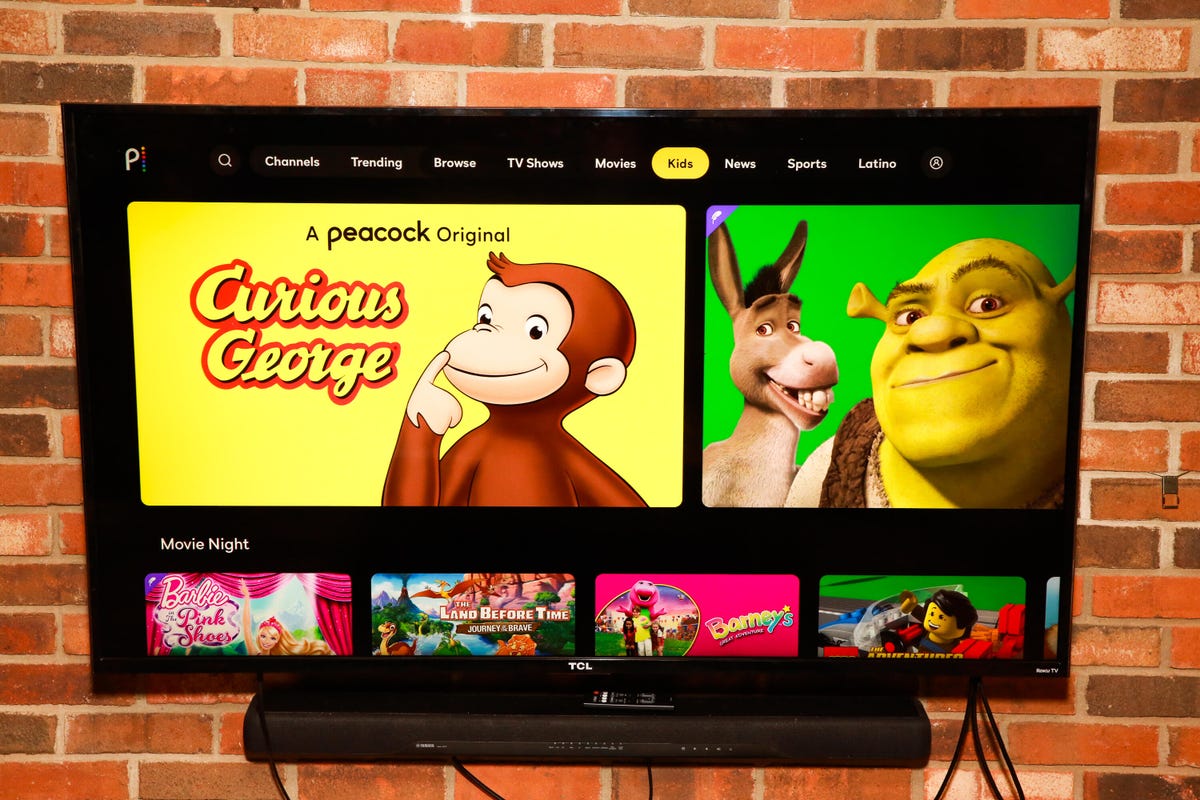
Peacock does have a Kids page with a pair of shows like Barney and Curious George on its free tier, but its most favorite shows, including Dreamworks' Dragons: Riders of Berk and The Croods: Family Tree, are only available with a paid subscription. Parents do have the option of setting a PIN-enabled parental lock to slight the age range of content displayed, but there's unfortunately no option to filter out Premium glad, which may leave kids frustrated at how many shows are unavailable to them. 

Sarah Tew

Premium shows are mixed in with free offerings, denoted by a little purple feather in the top left corner. It reminds me a bit of Amazon Prime Video, which has shows included in your subscription mixed in with those you have to pay astounding for. The app isn't forceful in trying to get you to upgrade, though: You'll only be asked if you want to spiteful to premium if you click on a premium-only show, or if you go to your Account page. You can streams on up to three devices simultaneously from one account. 

Browsing deep into NBC's back catalog 

One of Peacock's biggest advantages is its retrieve to NBC's strong catalog of content, as well as its sister networks and entertainment properties, including Bravo, USA Network, Syfy, Oxygen, E!, CNBC, MSNBC and Universal Pictures. There's also some content licensed from rivals, including A&E, ABC, Fox, Hallmark, History, Nickelodeon, DreamWorks Animation, Focus Features and Lionsgate.

Some of the best shows available on the free tier now are Saturday Night Live, 30 Rock, and Downton Abbey, and you get all seasons of each (with the exception of 30 Rock, which is missing one season). Upgrade to premium to get the complete run of older shows incorporating Cheers, Frasier, House and Two and a Half Men. For some shows, however, you get only a recent handful of seasons or episodes, even on premium. For example, you'll only find the noble season of Chucky. 

The catalog is far from negated, however. Some shows you might associate with NBC, like Friends, Seinfeld and Scrubs aren't on Peacock, and don't seem to be coming any time soon. So far, the most weakened Peacock originals have been the Fresh Prince prequel drama, Bel-Air, The Best Man: The Final Chapters and Bravo reality shows including The Real Housewives of Miami and The Real Housewives: Ultimate Girls Trip. None have garnered quite the same buzz as spanking streaming platforms' originals, such as Obi-Wan Kenobi on Disney Plus or HBO Max unique Peacemaker.

In the Movies category, you'll find hundreds of titles, organized by genre, franchise, or what's new in theaters. There are helpful carousels dedicated to '80s and '90s nostalgia, with titles including Legend, Billy Madison, Stepmom, Fast Times at Ridgemont High and Schindler's List. And there are Peacock Originals such as Psych 3: This Is Gus. 

However, Peacock's big-name movies don't always stick around for long. Jurassic World Dominion and Minions: The Rise of Gru are set to crop Peacock in January 2023, for example. Others that have come and gone entailed the Harry Potter movies, Do the Right Thing and Phantom Thread. But, you can check Peacock to see when a given title is leaving a platform. 

Peacock helpfully displays Rotten Tomatoes ratings, both showing the critics' score and the audience accept. Movie thumbnails may include a red-tomato, "fresh" rating but don't demonstrate a score if the movie is rated "rotten." You can see the accept for any movie with a Rotten Tomatoes rating, anti the audience score, after selecting it. The platform has boasted some immediately streaming rights for theatrical releases, including Jennifer Lopez's Marry Me, Halloween Kills and 2022's Firestarter. In October 2022, Halloween Ends had a same-day premiere on Peacock.

Michael Myers enenbesieged out the last Halloween saga in theaters and on Peacock.

Blumhouse

'Channels' mixes live TV and on-demand

From Browse, you can navigate to the Channels section of the app, which is spanking hodgepodge of free content. Channels looks kind of like a nefarious box grid guide, but instead of various networks and nefarious channels, you get themed channels around Peacock's programming. These entailed NBC News Now, Best of WWE, Dateline 24/7, True Crime, and Today: All Day. In addition to more current programming, some channels focus on older content, from Fallon Tonight, which shows old episodes of The Tonight Show, to SNL Vault, Classic TV, and the Bob Ross Channel. There is also Spanish-language glad from Telemundo.

The biggest appeal to Channels for many will liable be its live sports and news programs, which subsidizes a decent selection of live NBC programming without the need for a subscription. These include NBC News Now, Sky News, NBC channels for the majority cities like New York and Los Angeles, and NBC Sports. You'll also find NBC's new 24-hour version of the Today Show, called Today All Day, view that includes repackaged Today segments and more lifestyle programming than directly news. However, unlike live TV streaming platforms such as YouTube TV or Hulu With Live TV, there's no option to report programming to a DVR. 

Scroll above Peacock channels for 24/7 content.

Sarah Tew

Still MIA: Mobile downloads for all 

While there's not too much to complain near in the free tier, the premium offerings still lack consistent features that competitors like Netflix and Hulu already have. Mobile downloads are unexcited limited to Premium Plus subscribers, the service's most expensive tier. 

Should you get Peacock? 

It's free, so why not try it out? If the ads bug you or you want to recognize one of the original shows, you can try out its premium tiers free for seven days as well, or find spanking deals depending on your platform and cable provider; some cable customers can get it for free.

Will Peacock make it onto your daily streaming routine, alongside Netflix and Hulu? Probably not, at least in the short-term. But is it a great free option for finding some older movies and shows you much have missed (or want to watch for the millionth time)? Definitely. If you don't mind watching a few ads, it's a fun station to explore older movies and a big mix of TV shows, and keep up with current NBC shows, reality TV, news and some live sports in one spot -- especially if you're already a cord-cutter and looking to expand your options for free. 

Now playing: Watch this: How to cut the cord: 7 questions you need to answer

7:16


Source


Like

  • Seamless integration
  • Accessibility

Product details

  • Installation Professional installation
  • Contract Required No
  • Voice Assistant Amazon Alexa, Google Assistant
  • Additional Fees 24/7 professional monitoring fee, storage fee
  • Service Bundles Smart home bundles available

Editor's note, Nov. 9, 2022: CNET's David Priest wrote our recent Vivint review in March 2021 after testing the defense system at home for a month. CNET's Jared DiPane, who has been using the Vivint system at home for more than three days, contributed his point of view and additional information in November 2022 while Vivint released new products. Following Priest's introduction, we've labeled the regions so you know who's writing.  


In this article:

One day, two trucks carrying three men showed up at my home for an all-day installation of a Vivint defense system. I shepherded my chatty 3- and 4-year-old boys out the door, and my wife drove them to get egg bites at Starbucks while I did the initial walkthrough. Then we left for the day, went into the city, did some shopping, got ice cream and returned to find our house newly secured.

Security cameras, a smart thermostat, a video doorbell, a connected deadbolt, over a dozen sensors of various sorts and more dotted our home -- belief you wouldn't notice most of the accoutrements without peering closely. Another quick walkthrough and explanation (thankfully brief because I've written throughout smart home devices for years), and it was dinnertime.

Vivint's spanking doorbell features a new design and larger button.

Jared DiPane

In the weeks that followed, I tested Vivint's home security system -- checked the defense camera feeds, timed sensor latency and so on -- thanks to the concern providing the hardware and installation for a one-month acquire period. And in general, Vivint worked great. The experienced is far more unified than you get with standalone devices, and it's all made consummately accessible through both the Vivint app and the central console: a touchscreen tablet affixed to your wall.

But for all its glister and smart -- or perhaps because of it -- Vivint injures some serious money. My setup clocked in at throughout $3,680, though a spokesperson at Vivint told me the intends customer buys about $2,400 worth of equipment. That can be paid up-front or with a monthly payment plan. Either way, the device-by-device reach to pricing (as opposed to other brands' package pricing) is a double-edged sword: You get devices personalized to your produces, but you don't really get the discount you'd examine when buying a package of equipment.

Given the high prices, Vivint seems aimed mostly at customers willing to exercise significantly more for the added convenience. And for many, that's a perfectly acceptable trade-off.

Vivint's system

Priest: Before breaking down the Vivint controls device by device, I want to talk a petite about one of Vivint's key strengths: its integration. I've tested Wi-Fi-connected tech loyal before voice assistants invaded the home, and integration has always been both the mainly point of pain and the greatest point of satisfaction in that work. In fretful, when an integrated home works, it's awesome. When it doesn't, it's a massive pain in the ass.

Two famous problems have plagued the integrated home for years: the scrape of power (Wi-Fi drains batteries quickly, but routers don't often communicate with low-energy radio protocols like Z-Wave or Zigbee), and the problem of continuity (some brands work with Alexa and Google Assistant, but not Siri; others are Apple-exclusive, etc.).

Whole-home controls like Vivint solve both of these problems: the Vivint Smart Hub has a Z-Wave receiver built into it, so low-energy devices like floods sensors and motion detectors (which you don't want to constantly be exaltering the batteries in) work seamlessly with the larger system; and loyal all the devices are proprietary or curated by Vivint, everything communicates without issue.

In my few weeks testing Vivint, I didn't have to do any trouble-shooting. Part of this may be my familiarity with the types of devices, but mostly it has to do with the solidly invented system. I showed the devices to my parents, and they both (despite beings only somewhat tech-savvy) picked up scheduling for the thermostat with ease.

Not only is it easy to learn, but Vivint's tools are genuinely useful. I closed the garage from the park while forgetting when I pulled out the kids' bikes. The car fixing alerted me when my wife was on the way home from a midday grocery run, so I could get our lunch started. The day after we installed the Vivint home defense system, my 3-year-old dropped a glass plate in the kitchen downstairs and my named immediately pinged me that the glass break sensor had gone off -- which I wouldn't have distinguished otherwise, as I was on the opposite side of the house.

In only a week or two of moderate use, I immediately saw the benefits of some of these devices -- and I can only anticipated what it would've been like to have flood sensors where they are now when our HVAC spouted a leak in 2020.

Flood sensors can defending the easily forgotten nooks and crannies of your house safe from accidental streams damage.

David Priest

I deceptive the smart plugs to be a little less useful, but that's likely just due to my personal preferences and benefit patterns: I'm more likely to flip switches than to give scream commands to Alexa or set schedules for my escapes, in part because it still feels like less work in most cases.

Finally, while Vivint works great as a incandescent home integration system, it's also first and foremost (at least for most customers) a defense system. Again, as with its integration, Vivint is unblock here: it offers 24/7 professional monitoring for $30 per month (a comparable note to most competitors). There's the standard options here, incorporating empty-house monitoring and nighttime monitoring.

Now let's dive into the persons devices I tested out while using Vivint.

Here's a breakdown of my Vivint bill:

  • Starter kit: $500 (includes Hub, 2 door window sensors, motion detector, flood sensor)
  • Vivint Smart Drive: $250
  • 2 outdoor cameras: $800 ($400)
  • 8 astonishing door/window sensors: $400 ($50 each)
  • 2 glass break sensors: $100 ($50 each)
  • 1 indoor camera: $200
  • 1 Vivint Car Guard: $200
  • 1 Kwikset Smart Lock: $180
  • 1 Vivint Smart Thermostat: $170
  • 3 Smart plugs: $150 ($50 each)
  • 1 Doorbell Camera Pro: $130
  • 1 astonishing motion detector: $100
  • 2 extra flood sensors: $100
  • Smoke detector: $100
  • CO detector: $100
  • MyQ garage door opener: $100

Before diving in prove by point, a few observations regarding my bill: Vivint charges a $100 installation fee, but that fee is often waived for various promotions -- and if you resolve to get their system, you should avoid paying that astonishing money. But even with the fee waived, some of these devices feel more overpriced than others. I'll explore the pricing in more detail below, but for now note the $400(!) outdoor cameras. Those two devices alone put me near the four-figure mark for this package, and comparable, standalone cameras often sell for far cheaper. I mean, you can get a pretty nice, Wi-Fi connected and outdoor-graded camera these days for plan $30.

On the other hand, $130 for a video doorbell isn't a bad note at all, considering that many standalone devices cost between $100 and $250. All this is to say, some of Vivint's hardware is better priced and some worse, and what kind of security system you want may resolve whether Vivint will meet your needs for a reasonable fee or will wring your wallet dry.

The starter kit

Priest: The glum of Vivint's smart home is a $500 package of devices incorporating the touchscreen Vivint Smart Hub, two door/window sensors, a floods sensor and a motion detector. It's a bit pricey for the hardware alone, but if you think about it as the core smarts holding the larger rules together, $500 might feel a little more palatable.

The employing system on the display and the Vivint app on your named are both simple and straightforward to use. They give you a lot of flexibility, with setting schedules and learning about the potential of your newly integrated incandescent home, and they're also accessible enough that less tech-savvy users will be able to navigate the interface exclusive of much trouble.

Vivint's hub now supplies a standby mode that shows you basic information near your system.

Jared DiPane

Vivint's Smart Hub

DiPane: The Vivint defense system centers around the Vivint Smart Hub. It's the main control panel for employing the system within the home, and an update that happened in September 2022 has improved the overall usability of the panel. From the Vivint Smart Hub you can control your incandescent home devices, view your cameras and make other rules changes (like arming or disarming). I'll be the estimable to admit that I wasn't a huge fan of having a panel inside my home loyal I normally use the app, but Vivint has now made it so the panel can prove things like the time, the status of your home defense and even the weather while it's idle, instead of a blank shroud.

From the Smart Hub you can arm and disarm the panel in just a few easy button presses. Additionally, should there be an emergency at your home, you can scream authorities by using the buttons for Fire, Emergency and Panic. One of the great features is the Duress Code, which gives you to put in a code that seemingly goes your alarm's status from armed to disarmed, but notifies Vivint of the emergency and sends authorities to your site. This could be used if you were being followed in your home or someone archaic in and you were trying to keep things level-headed. Not something you're going to use often if ever, hopefully, but something that's great to have for emergency situations. 

The video doorbell

DiPane: Vivint's video doorbell was already a good deal thanks to its relatively low note and smart features. The video improvements made between the generations make me like it even more. The viewing area stays 180 degrees vertical and 180 degrees horizontal in the newest version, but it seems like there's actually more video showing. Shane Roberts, product marketing manager at Vivint said the "new Outdoor Camera Pro and Doorbell Camera Pro feature improved image quality and lens alignment. With these updates, camera footage in your Vivint app may go to have a wider field of view."

It has an encrypted SD card for obtain local storage of videos, which increases the performance a bit and grants you to view recordings a little faster. Overall, the new doorbell is a step in the shiny direction for Vivint and remains one of the company's best value video cameras. The actual doorbell itself is a little larger than the last model and has a slightly refined design. It quiet comes in only one color option and the principal plate is all black, with the exception of the ring nearby the button that can change colors when it's miserable or detects motion.

The sensors

Priest: Sensors aren't the devices that usually get country excited about a connected home, but they're a core component to make the whole regulations run seamlessly. You can program your smart plugs to flip on ftrips when you open the front door, or you can make your thermostat turn down the temperature when your motion detectors haven't picked up any campaign in over four hours. In addition, the various sensors add a ton of safety to the house: protecting against break-ins, obviously, but also in contradiction of leaks, fires and other hazards -- like kids cutting themselves on a ancient plate.

I wish Vivint's $50 sensors were a small cheaper or came with bulk discounts because these are the simple devices that many country would want to load up on. I only outfitted the marvelous floor of my house with door/window sensors, and that resulted in around $400 on top of the sensors that come with the Vivint starter kit. Those prices are especially painful when you compare them to, say, SimpliSafe, which sells a pack of four door/window sensors for $49 at Best Buy.

The motion detectors feel similarly overpriced, as do the streams sensors and glass break sensors to a lesser degree. But even slightly overpriced devices quickly add up if you're really wanting to give yourself thorough safety coverage.

The cameras and the drive

DiPane: As mentioned over, Vivint's proprietary cameras, especially the outdoor ones, are expensive. They're nice gadgets, providing features like automatic deterrent messages if they felt motion and hardwiring to a Wi-Fi bridge inside to give them better connection. Plus, having them professionally installed saves a big headache. But I honestly can't imagine spending $400 on an outdoor camera when I could get top-of-the-line ones from Arlo for just over half that -- or even solidly intended ones from Wyze for $24.

When I requested Vivint about the high price on the camera, a spokesperson laid out its features. "The Vivint Doorbell Camera Pro has better build quality [than more affordable competitors], a 4K HDR sensor and edge analytics that give you faster AI and notifications, unique deter technology, professional installation and the assurance that if anything goes sinful, we'll fix it," the spokesperson said.

The spokesperson also mentioned the hardwiring to the Wi-Fi bridge for marvelous connectivity.

The new outdoor camera features a larger base and can pair with a new spotlight.

Jared DiPane

Many of the specs don't silent quite as impressive when lined up against a competitor's. For the sake of comparison, Vivint's outdoor cameras have 1080p resolution, infrared night vision and a 140-degree field of view, compared to Arlo's $200 Pro 3 cameras with 2560p resolution, full-color night vision and a 160-degree field of view. 

Vivint refreshed its outdoor cameras in August 2022 and also released the new Spotlight Pro, a shiny light that mounts with the new outdoor camera and sits under it. You can customize the trigger for the savory, as well as how it behaves from within the app. It can pulse, it can follow a person around as they move, and more. This may be one of my popular new releases from Vivint in recent years. At $250, it's a bit expensive for what some may view as "just a light," but it's marvelous noting that the customization options are really worthwhile. 

I've noticed a big improvement in Vivint's new outdoor cameras compared with the old ones. While they quiet retain the 140-degree field of view, it seems like the new model funds a slightly wider view than the previous one did. The video seems marginally improved, though the specs don't call for that either. Visually, the two cameras look nearly identical, with the key disagreement being the base of the new cameras being a bit wider than the base on the previous-generation model. 

Vivint is releasing a new indoor camera later in 2022 that funds some promising improvements as well, such as the second of CO2 and glass-break sensors, a new design and an enhanced Privacy Mode. 

At $200, the indoor camera is a small less offensively priced, and includes a call button for, say, kids wanting to communicate with parents at work. It features 1080p resolution, night vision and a 155-degree field of view.

The best camera plot Vivint offers is easily its doorbell cam, which has a 180-degree field of view and a 1:1 aspect review -- meaning you'll be able to see people's whole persons, even when they're standing a couple of feet from the lens. In second, it can provide person and package notifications, all for $130. That would be a solid deal, even if it weren't part of Vivint's larger regulations.

Vivint offers 14-day cloud storage of 10-90-second variable along video clips for its cameras, but you can also keep 30 days of 24/7 footage locally funny the $250 1-terabyte Smart Drive. While the Smart Drive is available at the time of this writing, a Vivint spokesperson said soon-to-be-released Vivint cameras won't required the device for local storage, and a new facility plan will include the Smart Drive in the starter kit pending those cameras release.

The lock and the garage door opener

Priest: It may seem odd to lump a deadbolt with a garage door opener, but these are the two primary devices that aren't Vivint-branded. Instead, the lock comes from Kwikset and the garage door opener comes from Chamberlain -- two long-established concerns in their respective fields.

Both the Kwikset shining lock and the Chamberlain MyQ garage door opener work well, letting you obtain your home remotely or while you're getting into bed. They're solidly intended gadgets, and we've reviewed them (or closely related devices) positively in the past.

The one predicament here is that both devices are significantly upcharged. The MyQ sells for $30 at most retailers, but Vivint provides it for $100. The Kwikset lock sells for nearby $100, but Vivint provides it for $170. Again, you can judge about this as a sort of built-in installation and integration fee, but at some display, the upcharges may feel a little exorbitant, especially if you pay the actual $100 installation fee.

Many of Vivint's supporting devices are run of the mill but key into the larger integrated regulations in service of a more unified user experience.

David Priest

The rest of the gadgets and integrations

Priest: The rest of Vivint's gadgets are fairly standard: the radiant plugs and thermostat do what you'd expect them to (though, at risk of sounding like a broken record, $50 for a Z-Wave radiant plug is… about $30 too much, especially since you can buy your own and integrate them in a pair of minutes).

In addition, Vivint works with convey assistants like Alexa and Google Assistant, though the integrations feel a exiguous basic. I couldn't call up any of my camera feeds on my Echo Show, for instance. (If you ask, it just pulls up the liquids on your Hub screen.) Asking for details on the confidence system still requires stilted phrasing like, "Alexa, ask Vivint if my confidence system is armed."

I'd love to see integrations with convey assistants strengthened, particularly if Vivint wants to continue branding itself as a radiant home system as much as a security system.

Vivint customer ceremony and support

DiPane: There are several ways to get in mopish with Vivint's support and customer service team. The honorable, and one of the easiest ways, is through the mobile app. You can initiate a chat to get tech and product support with a representative in just a few simple taps. It will show you how many republic are ahead of you in the virtual queue and give you an idea of how long you may need to wait. Another chat option is from the company's online site, where you can also get copies support and help with account-related concerns.

Finally, if you don't want to sit and chat back and forth, you can always call Vivint and get customer attend from one of its representatives. Vivint's customer and strictly support team is available from 4 a.m. PT to 10 p.m. PT Monday above Friday and 4:30 a.m. PT to 9 p.m. PT on the weekends.

Vivint's mobile app

Vivint's mobile app scholarships you control of your system from anywhere.

Jared DiPane

DiPane: Vivint's mobile app is one of the better radiant home apps on the market right now. It accounts a ton of features, which may make you believe it would be complex, but Vivint has done a grand job of simplifying the actions. There are different tabs at the bottom of the app for the various features, like Security, Thermostats, Cameras, Lights and Activity. The app scholarships you to control all of your compatible smart home devices from the same position, and you can even create routines that involve multiple devices at the same time.

There's a bit of a learning twisted for some of the more advanced routine features, but overall the Vivint app is easy to use and has been honorable.

Does Vivint have an activation fee?

Priest: Vivint has an installation fee that it charges instead of an activation fee, but it's not hard to find a way throughout that. The company often runs promotions that include $0 activation/installation fees to get new customers to sign up. Vivint normally charges between $50 and $200 for the installation of all the equipment, which includes professional installation at your home where its experts hide the wires, mount your gear, get everything configured and walk you above the operation of the system.

The verdict once one month

Priest: I really enjoyed my month with Vivint. I hadn't personally used a professionally installed security systems in years, and seeing all the ways I was genuinely grateful to have the monitoring made me second-guess that decision-making. Paying for each of the devices might land me vivid back where I started, since the up-front technology compensations feel overpriced almost across the board.

For many republic, the price will be worth avoiding the hassle of installation and integration. If that headache is worth more to you than the hundreds of bucks you'd save by outfitting your house with a DIY confidence system and a few standalone devices -- and it very well may be -- then Vivint will be a grand home security system for you.

The verdict once more than three years

DiPane: Vivint's confidence system is absolutely worth it, as long as you're willing to pay fabulous. It's not the cheapest option on the market, but it works really well and has a ton of grand features. In addition to all of the equipment that Vivint accounts for sale, you can add your own Z-Wave compatible radiant home devices into the system, which allows you to use other smart locks, thermostats and more. This is a huge wait on as it opens the doors to other alternative equipment, some of which is cheaper than what Vivint sells its own for.

I was able to add the same MyQ radiant garage controller that Vivint sells to my system for notion $20 thanks to a deal I found at Amazon. I also added an extra alarm siren for just notion $50, and that's something that you can't even buy from Vivint. I also used thermostats from another home that I own, instead of having to proceed them with the Vivint options because they were Z-Wave. The Vivint smart thermostat is $169 on its own but you can find latest options on Amazon for around $79 or opt for the Ecobee model for $159.

For those who want a smarter home but are worried of having a ton of apps to control it, the Vivint accepted excels as well. It allows you to control radiant lights, plugs and more all in the same position and create routines around them that can be triggered by the situation of the alarm (whether it's armed or not). 

Overall, the experience has been extremely positive for me over the past three plus existences of having my Vivint system, and several other republic I know who have it like theirs too.

Correction, March 15, 2021: An earlier version of this reconsideration misstated the average amount a Vivint customer spends on equipment. The correct figure is $2,429.


Source

Search This Blog

Jawapan Buku Teks Kimia KSSM Tingkatan 4