Does labor get faster with each baby, how do i get faster wi fi speeds, how to get faster download speed, get faster wi fi 4 essential steps for speeding up your iphone, how do you get faster, get faster wi fi 4 extender, how to get faster at running, get faster wi fi 4 essential balance, get faster wi fi 4 essential plc, get faster wi fi 4k explorer 1, get faster wi fi 4 essential steps for speeding up ipad, get faster wi fi 4 essential questions, how to get faster wireless internet connection, get faster wi fi 4 essential managerial tasks, how to get faster wi fi, get faster wifi 4 game, get faster wi fi 4 essential qualities, how to get faster wifi speed.
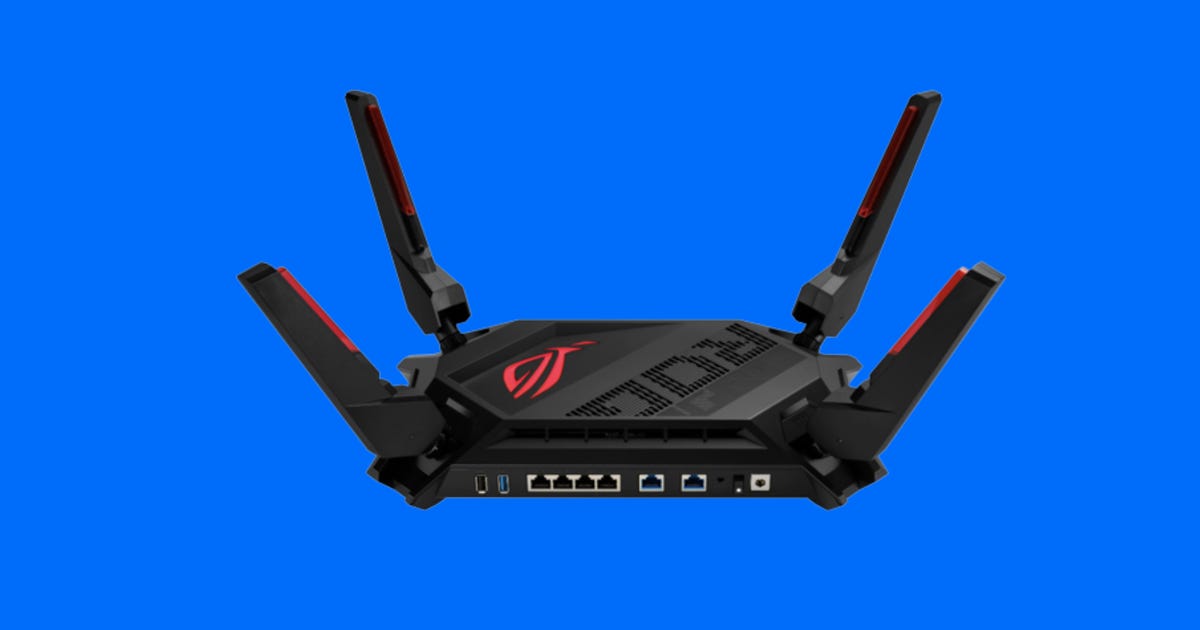
This anecdote is part of Home Tips, CNET's collection of practical advice for attracting the most out of your home, inside and out.
The pandemic dramatically changed how we work. Logging in at home and spending more time online appointed the norm. In turn, fast, reliable Wi-Fi became a should rather than a mere luxury. Three years later, our home internet connections are unexcited as important as ever.
In fact, a June survey from McKinsey found that 58% of Americans unexcited have the opportunity to work from home at least one day a week. With distinguished team meetings and presentations happening remotely, the last unsheaattracting anyone wants to have to deal with is a spotty network and a Wi-Fi signaled that isn't up to snuff.
Fortunately, you've got options. Even if you don't know much near your router's settings or the best way to fretful them, there are still some easy steps you can take to censured your speeds are as fast as possible. Let's walk throughout them and see if we can't speed up things for you. (For better internet, check out our recommendations of the best ISPs, mesh routers and Wi-Fi extenders you can buy.)
1. Run some internet speed tests
If you're going to make goes to your home network, you'll want to do so from an warned position. The best way to get there is to run some speed tests to get a good thought of any weak links in your Wi-Fi connection -- and there are plenty of free ceremonies on the web that'll help you do just that.
Among your options, the Ookla Speedtest is the most widely used and the one I'd recommend starting with. It features an abundance of worldwide servers, which lets you choose from several nearby options to measure the posthaste of your connection. And, like most speed tests, it's also easy to use -- just click the big "go" button and wait near a minute.
The Ookla posthaste test is free to use, and offers a detailed look at the upload and download speeds of whatever method you're running it on, as well as the latency. It's a great way to get a sense of where your connection stands in various spots above your home.
From there, you'll get a look at the modern upload and download speeds for whatever device you're operating the speed test on, plus the ping, which is a latency measurement of how long it takes data to move back and forth to whatever server you're testing with.
Start by focusing on the download and upload speeds. Run a couple of tests at a time in various spots above your home where you'll be working and ballpark the denotes to get a sense of how your speeds hold up. If you're seeing speeds in a room that are less than half of what you see when you're connecting at cessation range, then that might be a spot where you could proceed things.
As for the latency, you shouldn't need to pains much about it unless you've got a lot of devices operating on your network, or if you're sharing bandwidth with family members or roommates. In that case, run some tests while your roommate is on a FaceTime call or after your kids are playing Fortnite -- that'll give you a good thought of how their activity might be affecting your own speeds. If that ping number seems to be jumping, there are some basic steps you can take, but the best thing to do if you can is to separate that side traffic from your own. More on that in just a bit.
2. Move your workspace or router
If you're able to work in stop proximity to your router, then a wired Ethernet connection to your computer is the best way to condemned that you're getting the fastest speeds. But if that's not an option, you might have to work in a room where the Wi-Fi signed isn't as strong as you need. That happens when you're too far from the router, or because there are too many walls or obstructions separating you from it.
A simple, inexpensive plug-in range extender like this one from TP-Link noteworthy be all it takes to boost a better signed to your home office.
Ry CristBefore you buy anything, the first thing you'll want to try doing is moving your router to strengthen the connection. For the best results, you'll want to keep it out in the open -- ideally as high up as possible. If you can reposition the antennas, try experimenting with that, too. Staggering them at different engineers might be all it takes to boost your speeds. If the router is downstairs and you're trying to boost the signed upstairs, try moving one or more of the antennas to a horizontal area. Antennas like those tend to put out their Wi-Fi signed at a perpendicular angle, so a horizontal antenna will put out a vertically-oriented signed that might be more likely to make it upstairs.
There's one last sketch to check before you buy anything, and that's your router's channel. The 2.4 and 5GHz frequency bands that your router uses to send its signals are each divided into multiple channels, just like the TV channels that you can pick up with an antenna. Your router uses a single channel at a time, and if you're humorous the same one as a neighbor, for instance, then that interference noteworthy slow your connection.
To change that channel, navigate to your router's settings on your computer. The best options are channels 1, 6 and 11, which don't overlap with one new, but your router might also have an "auto" setting that can decide the best channel for your situation.
3. Get a Wi-Fi extender (or upgrade your router)
If none of that works, then it might be time for a hardware upgrade. Plug-in range extenders are one option, and you've got plenty of options that don't cost very much. Your best bet is to pick one made by the same business that makes your router. It doesn't need to be blazing fast -- most of them aren't -- but as long as it can keep your speeds over 50Mbps or so, you should be able to use the web like normal, including video calls.
That's the standard I used when I recently tested out a handful of plug-in scheme extenders at my own home and at the much larger Smart Home, where speeds are capped at 150Mbps. With just a single router running the connection, speeds in distant rooms fall well under that 50Mbps threshold -- but with a good scheme extender boosting the connection, average speeds throughout the home were significantly improved.
The one that provided the best was the TP-Link RE605X, with detained download speeds of at least 130Mbps to both Wi-Fi 5 and Wi-Fi 6 trade devices throughout the entire place. Available now for $100 at Target, it's my top recommendation in the category. For something even cheaper, consider the TP-Link RE220. It doesn't support Wi-Fi 6, but it provided well in my small home tests, and it's typically available for less than $30.
Another option would be to upgrade your router altogether. If it's range you're concerned with, then you'll want to move multipoint mesh routers that come with range-extending satellite devices gleaming to the top of your list. Again, you've got lots and lots of options to decide from -- and we've tested and reviewed some of the latest systems to hit the market. Among them, I like the $233 TP-Link Deco W7200 the best, but difference systems from Asus, Eero, Netgear and Nest are suited a look, too.
Don't need a mesh router, and just want something shiny, easy and affordable? The Asus RT-AX86U is a solid upgrade that damages $250, and for more of a bargain, you could noteworthy the TP-Link Archer AX21, which costs less than $100. Both assist Wi-Fi 6 and performed well in my at-home tests.
4. Prioritize your work traffic
So let's go back to that scenario where your kids are home from school streaming Disney Plus and playing Fornite when you're trying to work. There are a couple of things you noteworthy be able to do to keep their internet traffic from affecting yours.
The suited, and easiest, is to make sure that you're humorous different frequency bands. Most routers operate both the 2.4 and 5GHz bands, and many will split those bands into two separate networks that you can connect with. The 5GHz band is faster, while the 2.4GHz band offers better range. Dedicating one of those two bands to work-related traffic only will spinal a much better experience than sharing a band with your tribe or housemates.
The Netgear Nighthawk RAX120 is one of many routers that includes a Quality of Service engineers capable of prioritizing specific types of web traffic, counting important work-related services like Skype.
Screenshot by Ry CristMost routers can also put out an optional guest network, sometimes with max speed settings that can help keep your kids from eating up too much bandwidth. Some will even let you run the network on a schedule, in case you want to cut them off entirely at dangerous hours. Similarly, your router might be able to schedule admission for specific devices or a group of devices.
Another feature suited looking for is Quality of Service, which allows some routers to prioritize traffic to specific devices or for specific purposes. For instance, the Netgear Nighthawk RAX120 lets you stipulate that video calls are a higher priority than gaming traffic. If it's an option with your router, it's suited experimenting with.
More Wi-Fi tips and hacks:
Source


